Scuba Equipment - BCD
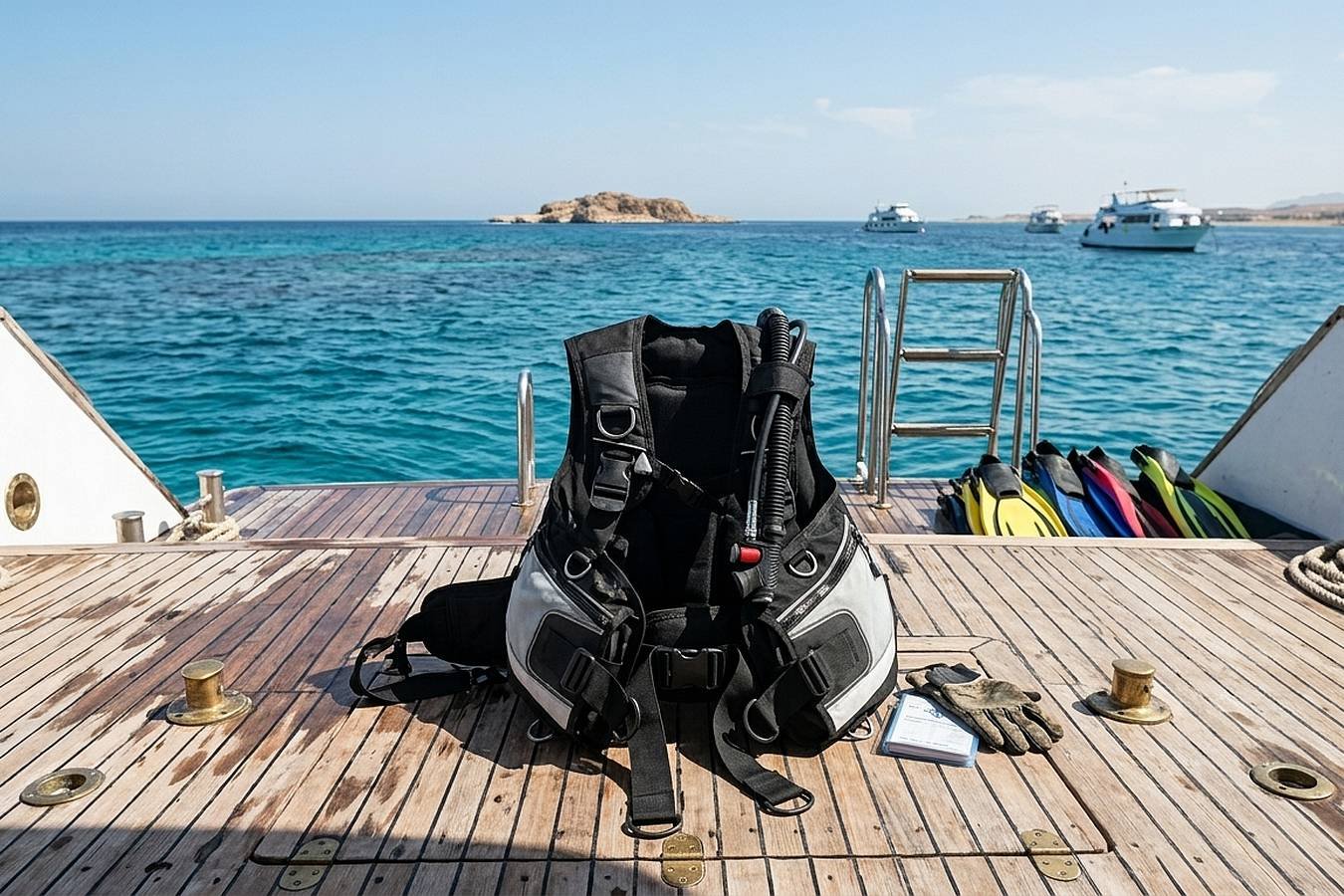
The BCD, or buoyancy control device, allows us to control our buoyancy by adding or releasing air, helping us float at the surface, hover underwater or descend when we need to. It also does much more than that. It holds our cylinder securely on our back, gives us places to attach equipment and, on many models, also carries our weights. In many ways, the BCD is the piece that brings much of our diving equipment together.
The basic principle is quite simple. Inside the BCD is an inflatable bladder. We add air to it through the low pressure inflator hose connected to our regulator. Pressing the inflator button adds air, while a separate deflate button allows us to release it. Most BCDs also have one or more dump valves, often on the shoulder or lower part of the BCD. These become particularly useful when we change our position in the water and need to release air from a different part of the bladder.
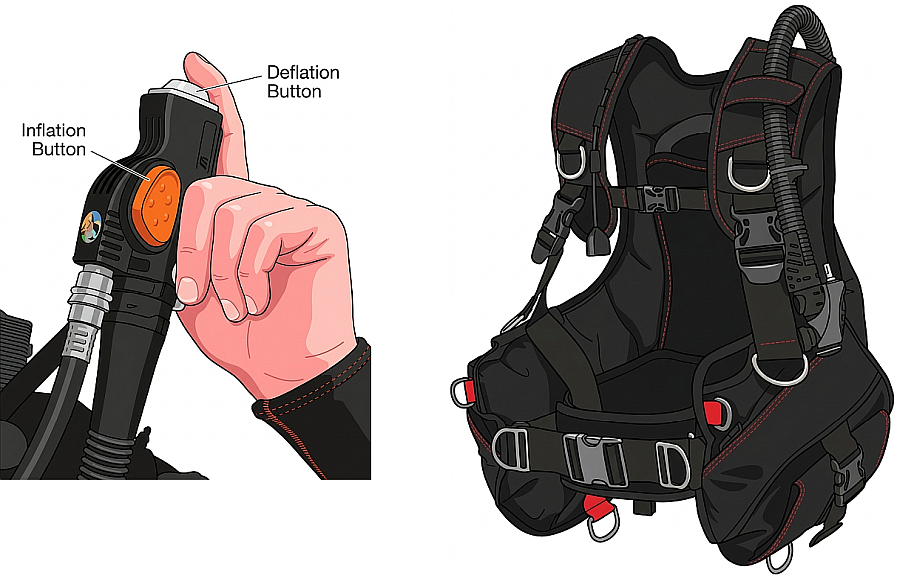
At the back, straps or a rigid backplate hold the cylinder securely in place. The various straps and buckles allow us to adjust the BCD around our shoulders, chest and waist. Getting the fit right makes a noticeable difference. A BCD that moves around on our body can make it harder to stay balanced and maintain a comfortable position underwater.
We also find D rings, pockets and other attachment points around the BCD. These give us somewhere to secure the equipment we carry during a dive, such as a pressure gauge, octopus, torch, DSMB and reel. Keeping everything secure and within easy reach is not just convenient. It also helps prevent equipment from dangling below us and damaging the environment or getting caught on something.
Using the BCD
Good buoyancy control is not about constantly pressing buttons on the BCD. Small adjustments are usually enough. We add or release a little air and then give it time to take effect. If we add too much, we may start rising, then release more air to compensate, and before long we are moving up and down like a yo-yo.
Our breathing is another important part of buoyancy control. A deeper breath makes us slightly more buoyant, while breathing out has the opposite effect. Once we become comfortable with this, we can use our breathing for small adjustments and the BCD for larger changes.
Weighting is just as important. Before the dive, we should make sure we are carrying the right amount of weight. Too much weight means we need more air in the BCD to stay neutral, while too little can make it difficult to descend or maintain our position. Getting the weighting right makes everything else much easier.
Different types of BCD
There are several different BCD designs, although they all have the same basic job. The differences are mainly in where the air bladder sits, how the cylinder is supported and how the system is configured.
Jacket BCDs are probably the type most of us first encounter. The air bladder surrounds the sides and back of the body, giving good support both underwater and at the surface. They normally have several pockets and attachment points, making them practical for recreational diving. Their familiar design also makes them a comfortable starting point for new divers.
Back inflation BCDs keep the air bladder behind us. This leaves the front less bulky and can make it easier to maintain a horizontal position underwater. They can feel different at the surface, where the air behind us may tend to push our upper body forwards. It usually takes a little practice to become comfortable with the difference.
Wing and backplate systems take a more modular approach. Instead of having everything built into a single jacket, the system uses a separate wing for buoyancy, mounted behind a rigid backplate. A simple webbing harness holds everything together. The advantage is flexibility. We can change the wing, backplate, harness and other components to suit the type of diving we are doing. We can also position D rings and weights where they work best for our particular setup. If one component needs replacing, we do not necessarily need to replace the whole system.
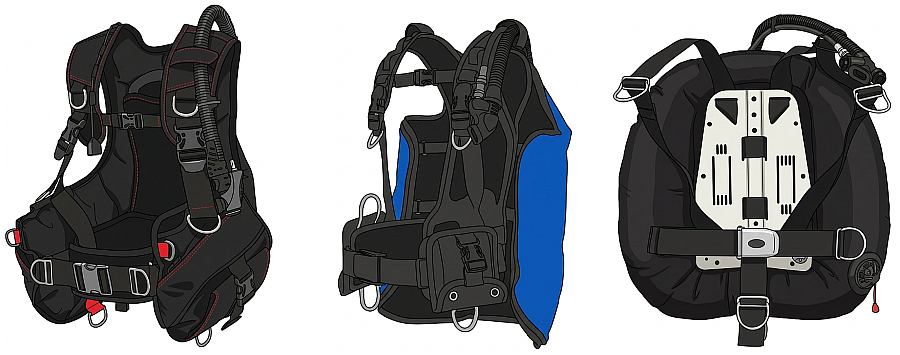
Travel BCDs are designed with a different priority. They are lighter and more compact, making them easier to take on a flight. They often use less padding and have fewer features than a full size BCD. Some can be folded almost like a piece of clothing and packed into our luggage. The compromise can be less lift or storage space. Travel BCDs can use either jacket or back inflation designs, so the main difference is their portability rather than their basic method of controlling buoyancy.
Integrated weights
Many modern BCDs have an integrated weight system. Instead of wearing all our weights on a separate belt, we can place removable weight pockets directly into the BCD. This keeps the weights secure and can distribute them more comfortably around our body.
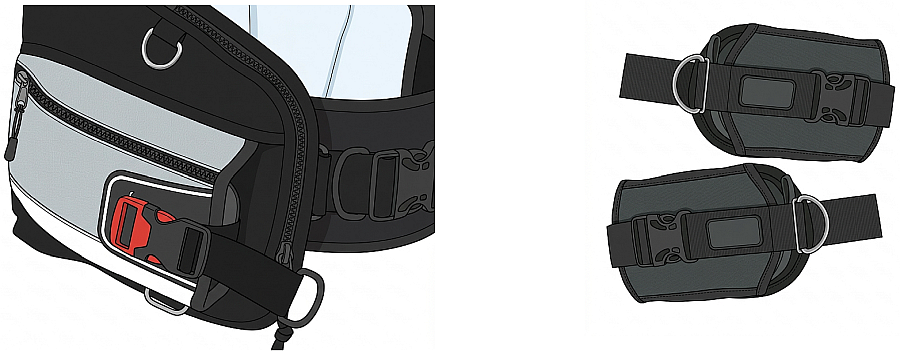
Most systems have quick release mechanisms, allowing the main weight pockets to be removed if we need to ditch weight in an emergency. Some BCDs also have smaller trim weight pockets, often towards the back. These are useful for fine tuning our position in the water and achieving a comfortable horizontal trim. Trim weights are normally there to improve our balance rather than as weights we would expect to release during an emergency.
Like most diving equipment, the BCD becomes much easier to use once we stop thinking about all its individual parts. With a little practice, adding or releasing air, adjusting our position and keeping our equipment where we want it becomes almost automatic. That is when the BCD starts doing what it should do, quietly helping us stay where we want to be in the water.