Scuba Equipment - Fins
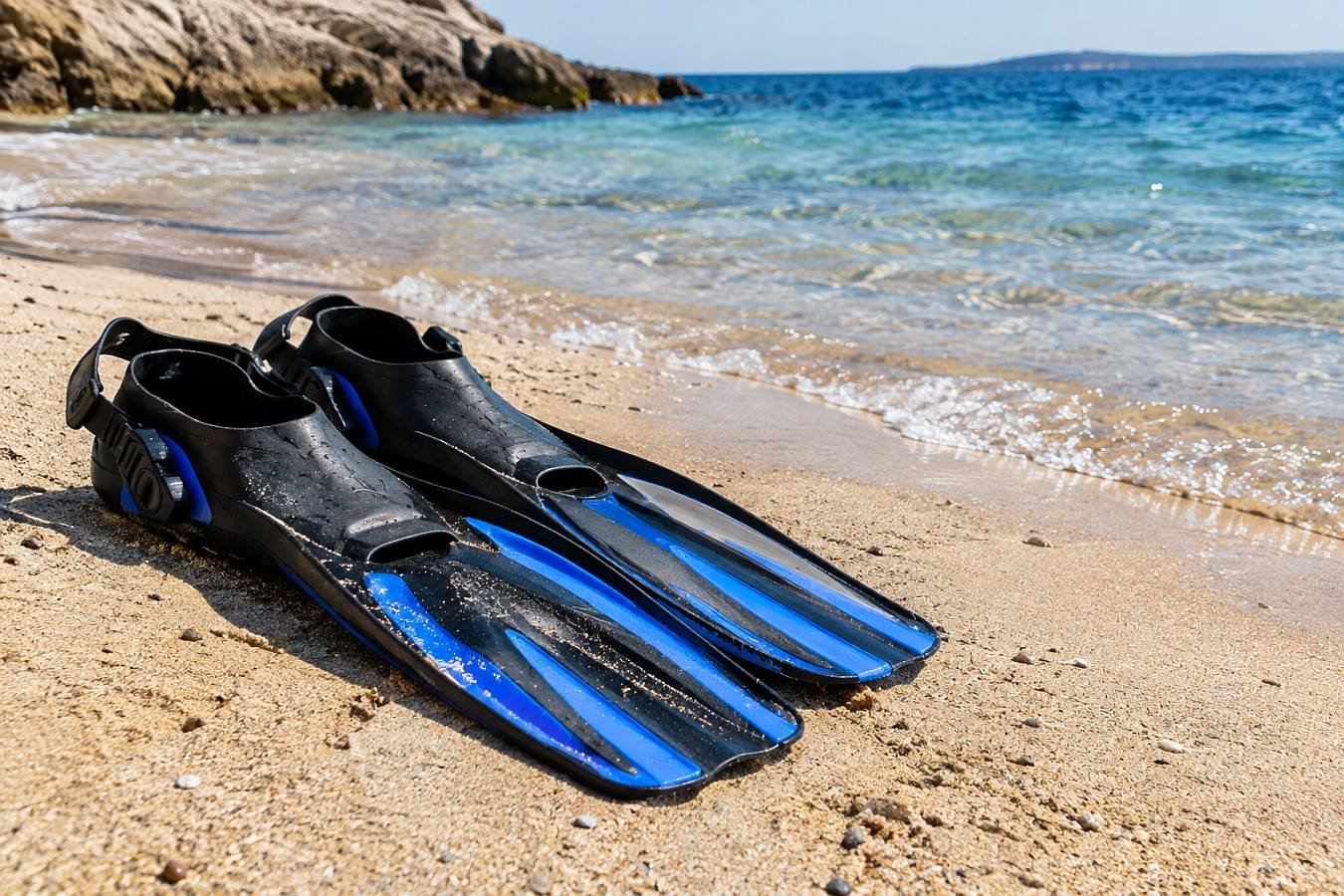
Fins are what turn our legs into an efficient means of propulsion underwater. We can swim without them, of course, but trying to cover any real distance or deal with a current would quickly become tiring. A good pair makes a noticeable difference. When the fins suit us, each kick feels more natural and we can move through the water with less effort. It also means using less energy and less gas.
I would not recommend choosing fins simply because they are the cheapest pair or because someone tells us they are the best. Our feet, kicking style and the type of diving we do all make a difference.
The first choice is usually between shoe fins and strap fins.
Shoe fins, also known as full foot fins, have a closed heel and are worn with bare feet. They are light, simple and particularly well suited to warm water. They are also a common choice for pool training, where we do not need the additional protection provided by a boot.
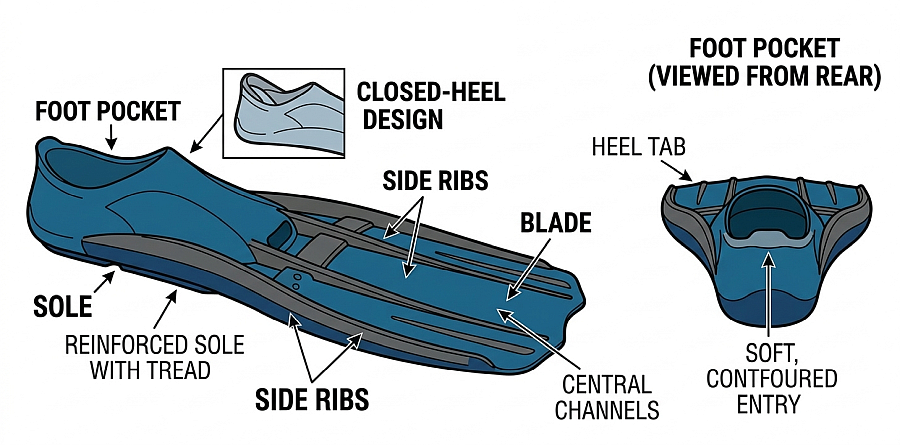
Strap fins have an open heel and an adjustable strap that holds the fin in place. We normally wear them with neoprene boots, which makes them a much more versatile option. They work well for cold water and give us the extra protection we need when walking over rocks, stones or other uneven ground. I particularly appreciate this when getting in and out of the water at sites where we have to walk some distance in our diving gear.
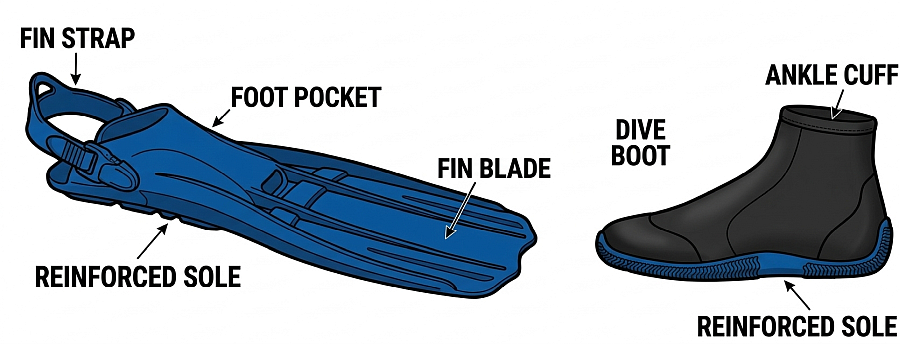
The shape and stiffness of the blade also have a big influence on how a fin feels in the water. Long fins can give us plenty of power and are useful when covering distance or dealing with a strong current. The downside is that they can become awkward in confined spaces, where precise movements are more important than maximum thrust.
Short fins are easier to control and work well when we need to manoeuvre in tight spaces. The compromise is that we usually need to kick more often to cover the same distance, which can become tiring during a longer dive.
Split fins have a blade divided down the middle. The design is intended to make each kick easier and many divers find them very comfortable, especially when using a relaxed kicking style. Personally, I would not choose them for diving where I expect to spend a lot of time fighting a strong current, as some designs can feel less powerful in those conditions.
Frog style fins are popular with technical and cave divers because they work particularly well with the frog kick. Their shorter and stiffer blades give us good control and allow us to keep our movements close to our body. This is especially useful in confined environments where a wide flutter kick could disturb the bottom or damage the surroundings.
Channel fins use raised sections along the blade to create a channel through which the water is directed during the kick. The idea is to improve the efficiency of the fin and produce good thrust without requiring excessive effort. As with other designs, how well they work for us depends very much on our own kicking technique and the particular fin.
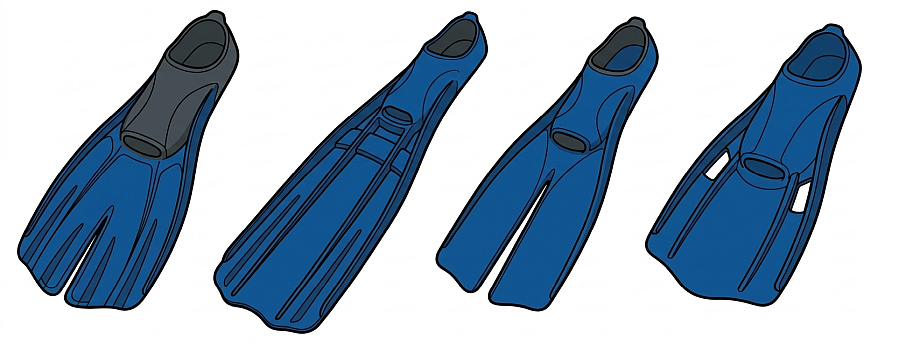
There is no single fin that is perfect for everyone. What works brilliantly for one diver can feel completely wrong for another. Before buying a pair, I prefer to try different designs whenever possible. We can borrow them from other divers, rent different models from a dive centre or take them into the pool and see how they feel. Whenever I get the chance to visit a water sports exhibition, I also take the opportunity to try different types of equipment and see what works best for me.
A fin can look perfect on the shelf and still feel uncomfortable once we put it in the water. A little time spent trying different options can therefore save us from spending money on a pair that leaves our feet or legs aching after every dive.