Scuba Equipment - Gas cylinder
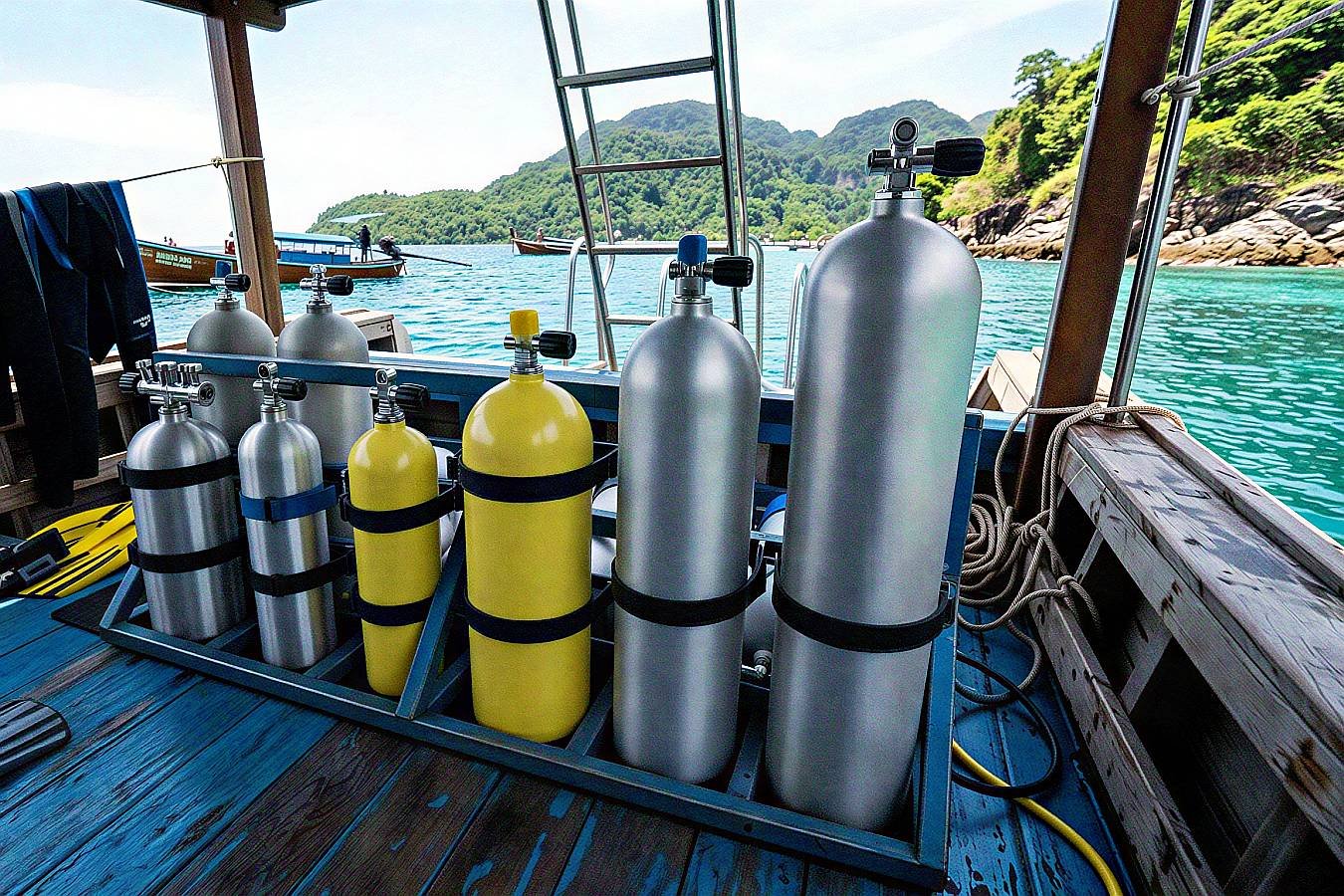
The diving cylinder stores the gas we breathe, usually compressed air. It holds the gas at high pressure and supplies it to our regulator, which reduces the pressure to a level we can breathe comfortably at depth.
Cylinders come in different sizes and materials. Most recreational divers use a steel or aluminium cylinder with a capacity of 10, 12 or 15 litres. Smaller cylinders are also available for specific purposes. Technical divers may carry several cylinders containing different gas mixtures for different stages of a dive.
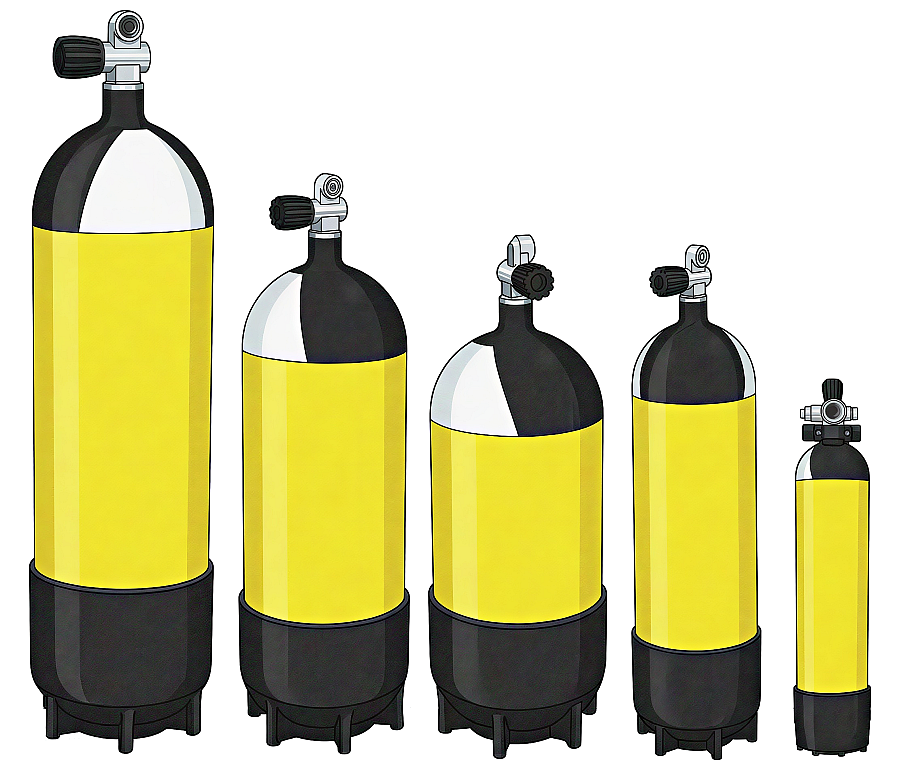
A cylinder has several parts. At the top, we find the valve, which controls the gas supply and connects to our regulator. Below it, the neck and shoulder lead into the main body. Some cylinders have a protective boot at the base to help them stand upright and protect them from knocks.
The body carries markings that tell us about the cylinder's specifications and inspection history. These usually include its capacity, working pressure (WP), test pressure (TP), inspection date and other useful information. I always recommend familiarising yourself with these markings, particularly when using a cylinder you have not used before.
12L WP 232 BAR TP 348 BAR 5/26
Most cylinders contain compressed air, which is suitable for recreational dives. Some contain nitrox, a mixture with a higher oxygen content than air that can extend no-decompression limits. Technical divers may use trimix, which combines oxygen, nitrogen and helium, or pure oxygen for specific stages of decompression. Whatever the gas, we must know what our cylinder contains and understand its limits. Specific training is required for the different types of gas.
The two most common cylinder materials are steel and aluminium. Steel cylinders are heavier and generally remain negatively buoyant underwater, often reducing the amount of lead we need. Aluminium cylinders are usually lighter on land but become more buoyant as we use the gas. Both affect differently our trim towards the end of the dive, requiring a good weight plan.
Cylinder capacity and working pressure also determine how much gas we carry. Common working pressures are between 200 and 232 bar, although 300 bar cylinders are available. A larger cylinder holds more gas at the same pressure, but it is also heavier and bulkier. When choosing a cylinder, I consider the planned dive, our gas consumption and the reserve we need.
There are different ways to carry our gas. Most recreational divers use a single cylinder mounted on the back. A twin-set uses two cylinders on the back. Sidemount setup places them alongside the body rather than on the back. Technical divers may also carry stage cylinders to provide additional gas for different parts of a dive. Another option is a rebreather, which recycles the gas we breathe out, removes carbon dioxide and adds oxygen as needed.
Finally, we need to look after our cylinders. I rinse mine with fresh water after diving, especially in salt water, and store it securely to avoid unnecessary knocks. Cylinders require periodic inspections and pressure testing. In many European countries, a visual inspection every two and a half years and a hydrostatic test every five years are common intervals.
I always check the applicable requirements and inspection markings before using a cylinder.