Scuba Equipment - Regulator
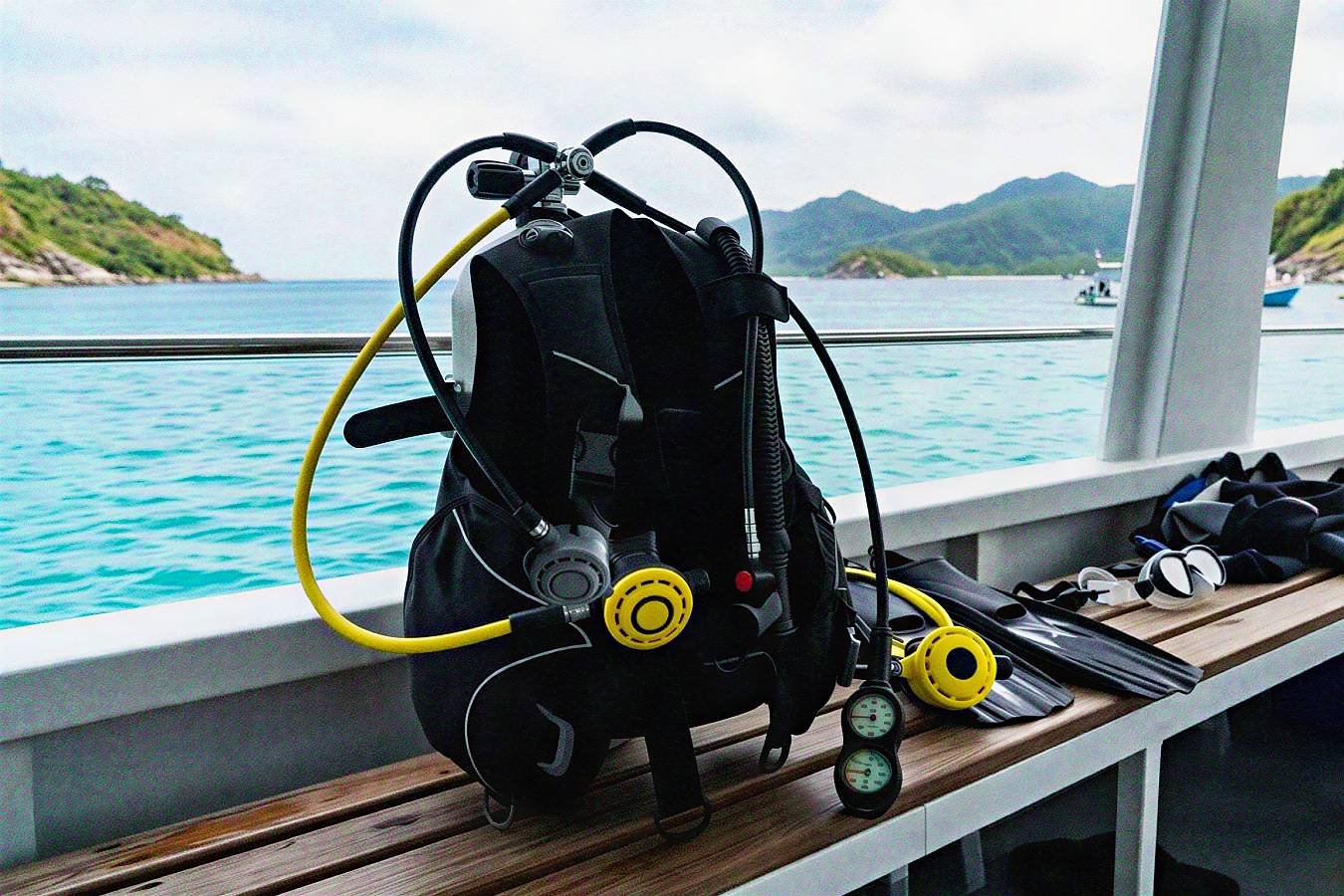
The regulator is the piece of equipment that allows us to breathe underwater. The air in our cylinder is stored at high pressure, usually between 200 and 300 bar. The regulator reduces this pressure in two stages, delivering gas at the same pressure as the surrounding water so we can breathe comfortably at depth.
The first stage attaches to the cylinder and reduces the pressure to an intermediate level, typically around 10 bar above ambient pressure. The second stage is the part we put in our mouth. It works on demand, delivering gas when we inhale and releasing our exhaled breath into the water.
A standard recreational setup includes a primary second stage, an alternate air source, commonly called an octopus, a hose to inflate our BCD and a pressure gauge. Some divers use wireless transmitters instead of a traditional gauge. Technical divers may use two independent first stages, while twinset and sidemount configurations provide separate gas supplies and regulator systems.
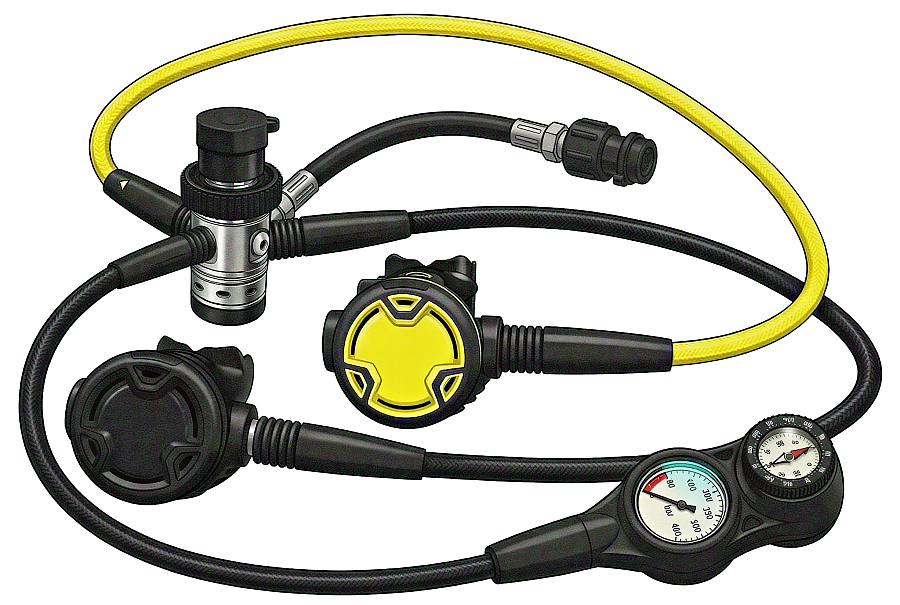
We must look after our regulator. Rinse it with fresh water after every dive, making sure the dust cap is fitted securely. Avoid pressing the purge buttons when the regulator is disconnected from a cylinder and unpressurised. Let it dry away from direct sunlight before storing it.
Regular professional servicing is also essential. A qualified technician inspects the internal components and replaces worn parts before they become a problem. I have my own regulators serviced every 12 months, usually at the beginning of the diving season. Our regulator provides every breath we take underwater, so it is not worth taking shortcuts with its maintenance.
When diving in cold water, we should use regulators specifically designed for low temperatures. As gas expands inside the regulator, it cools, which can cause internal freezing under certain conditions. This may lead to a continuous flow of gas, known as a free flow. Cold water regulators are designed to reduce this risk.