Scuba Equipment - The Diving suit
We all want to feel warm and comfortable underwater. It is easy to underestimate how quickly we can get cold when we first start diving. The water might feel perfectly comfortable on the surface. But we have a very different feeling after forty minutes underwater.
The suit we choose depends on several things, including the water temperature, how long we normally stay underwater and how well we personally cope with the cold. Get it wrong and a beautiful dive can quickly turn into a long, uncomfortable wait to get out of the water.
Wet suits
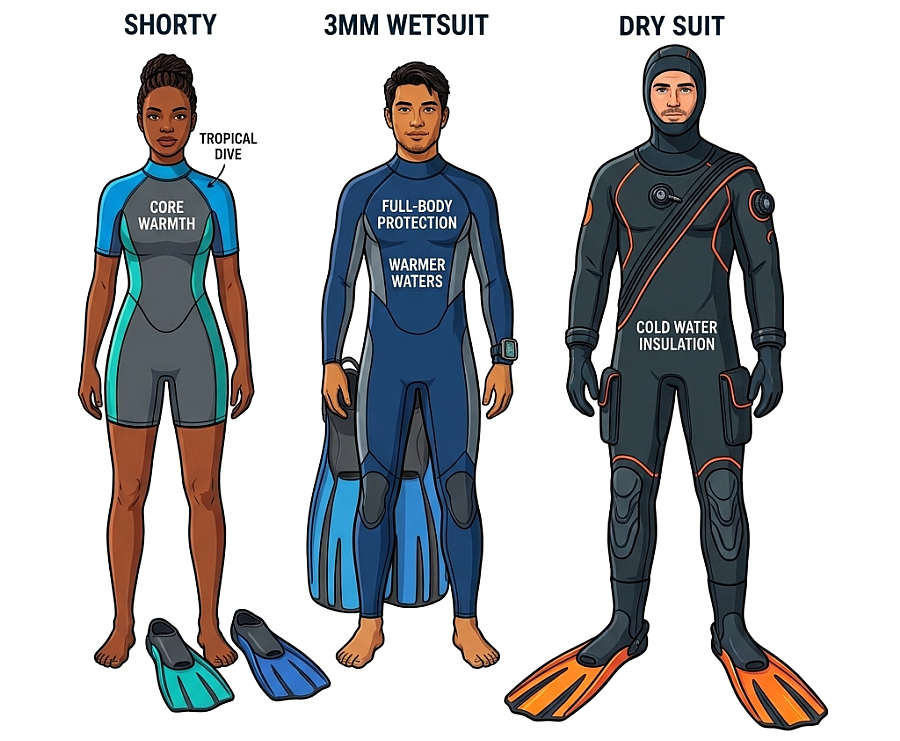
For most of us, the first suit we encounter is the wetsuit. It works in a fairly simple way. A small amount of water gets between our skin and the neoprene, and our body warms that water. The neoprene then helps to slow down the loss of that heat. Wetsuits come in different thicknesses, usually measured in millimetres, so we can choose something appropriate for the conditions. A 3 mm suit can be perfectly comfortable in warm tropical water, while 5 or 7 mm is more suitable for cooler temperate water. When the water gets really cold, we can add a hood, gloves and boots to keep as much of our body covered as possible.
There is a trade off with thicker neoprene. It keeps us warmer, but it can also make movement a little harder. It also gives us more buoyancy, so we need additional weight to compensate.
Semi dry suits
Semi dry suits sit somewhere between a conventional wetsuit and a dry suit. I find them an interesting option for divers who regularly encounter cooler water but do not want to move to a full dry suit.
The main difference is in the seals. A semi dry suit has tighter seals around areas such as the neck, wrists and ankles, which greatly reduces the amount of water moving through the suit. Some water will still get inside, but it tends to stay there and warm up rather than being constantly replaced by cold water. The result is better insulation than we would normally get from a wetsuit of similar thickness, while we still retain much of the simplicity of wetsuit diving.
Dry suits
A dry suit keeps the water out rather than relying on the suit itself for insulation. Instead, waterproof material, seals and a watertight zip keep us dry. Our insulation comes mainly from the clothing we wear underneath and the layer of air inside the suit.
A dry suit also introduces another aspect to our buoyancy control. As we descend, the pressure around us increases and the suit becomes uncomfortable unless we add some air inside it. This air adds buoyancy, so we may need more weight to compensate for it and achieve neutral buoyancy. We therefore need to learn how to add and release air from the suit while maintaining good buoyancy control. Proper dry suit training is important. We are adding another skill to an already busy set of tasks, and it takes some practice before it becomes natural.
For cold water diving, the difference can be remarkable. Instead of climbing out of the water with a wetsuit full of cold water, we can remain warm and dry throughout the dive. This makes a dry suit particularly useful for regular cold water diving and essential equipment for some forms of diving, such as ice diving.
Neoprene or membrane?
Dry suits themselves come in different materials, with neoprene and membrane or trilaminate being two common choices. They behave quite differently. This is another decision we need to make.
Neoprene dry suits are made from the same basic type of material used in wetsuits. The material itself provides some insulation, so we do not need quite as much clothing underneath. They also tend to have a closer fit and can feel quite natural to dive in. The downside is that they are thicker and heavier, which becomes noticeable when we have to pack one into a travel bag.
Trilaminate suits take a different approach. The material itself provides very little warmth, so all our insulation comes from what we wear underneath. At first this might sound like a disadvantage, but I actually find the flexibility useful. We can change our undergarments depending on the conditions, adding more layers for very cold water or using something lighter when temperatures are more moderate.
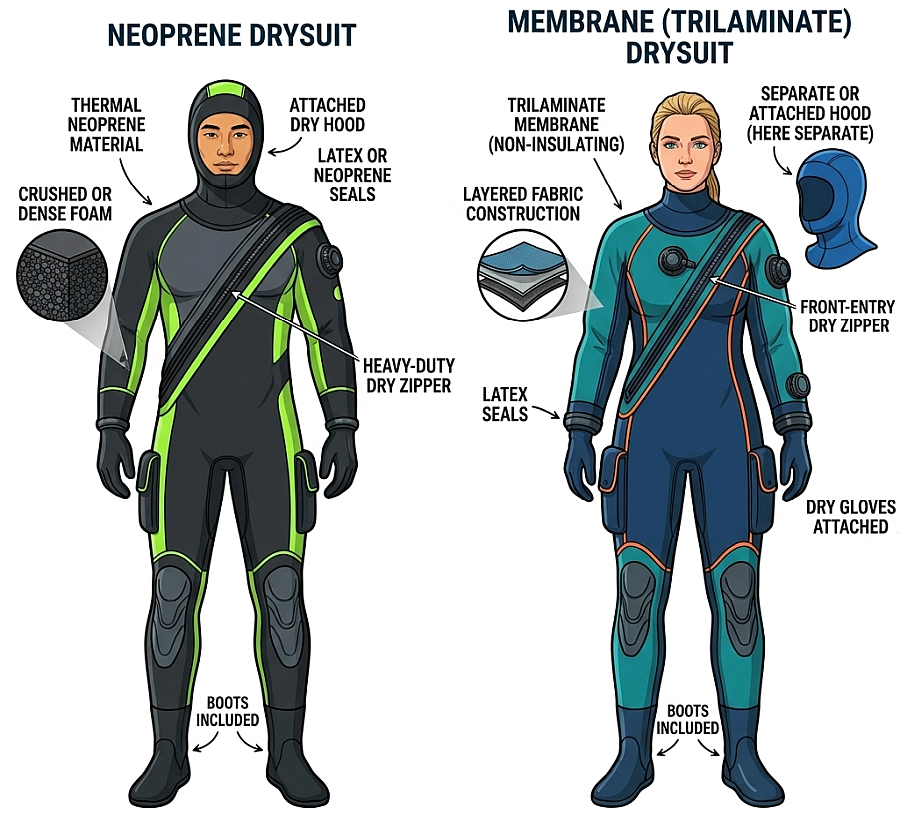
Trilaminate suits are generally lighter and easier to fold, which can make a difference when travelling. The trade off is that the undergarments can take up more space than those used with a neoprene suit. Trilaminate suits also tend to have a roomier fit, giving us plenty of freedom to move. Initially they can feel quite baggy compared with neoprene.
Choosing a suit
There is no point buying a suit simply because another diver tells us it is the one to have. Our diving habits, the places we visit and how easily we get cold are all different. Someone spending most of their holidays in warm tropical water may have little reason to own a dry suit. For someone regularly diving in cold local waters, however, being able to stay warm can make such a difference that the investment becomes much easier to justify.
Budget is obviously part of the decision too. A wetsuit is usually the simplest and most affordable starting point. A dry suit involves not only the suit itself, but also suitable undergarments and the training needed to use it properly.
If we only dive occasionally, renting a suit from a dive centre can make much more sense than buying one and leaving it hanging in the cupboard for most of the year.
Personally, I think trying different suits before buying is well worth the effort. Fit and comfort can be surprisingly different between manufacturers and models, and something that looks perfect in a shop may feel very different once we are wearing it in the water.
Looking after our suit
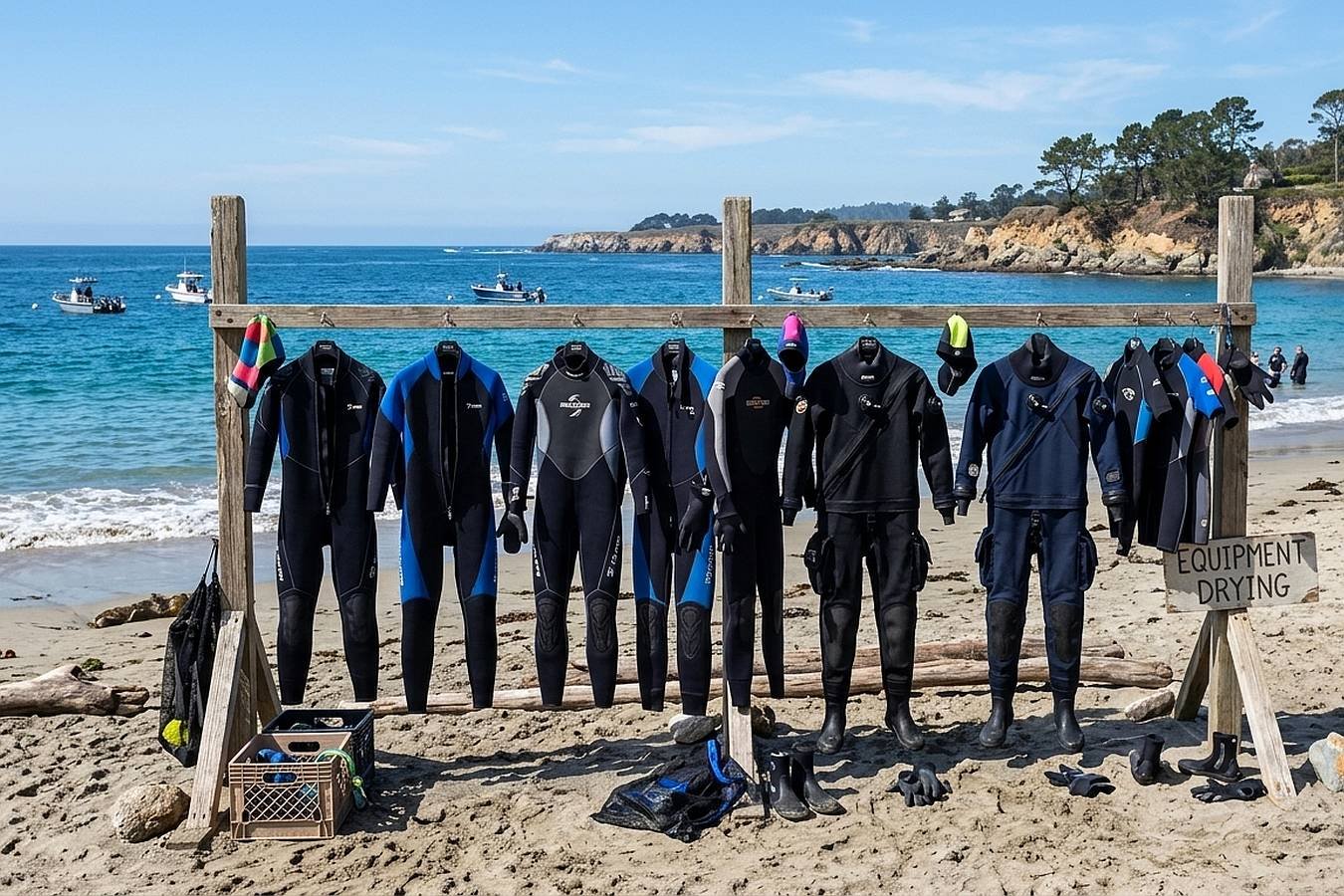
Whatever type of suit we use, a little care goes a long way. After a dive, I like to rinse the suit with fresh water to remove salt, sand and chlorine. These may seem harmless, but over time they can damage materials, zips and seals.
Dry suits deserve particular attention. The neck and wrist seals are especially vulnerable because they are often made from latex or silicone. They can deteriorate, crack or lose their elasticity, particularly when exposed to sunlight or stored badly. I make a point of checking them regularly for small cuts or signs of wear before they turn into a problem underwater.
When the suit is not being used, it should be stored away from direct sunlight and preferably on a wide hanger. The seals also need to be treated according to the manufacturer's recommendations. With a piece of equipment that can represent a significant investment, a few minutes of care after each dive is a small price to pay for keeping it working properly.