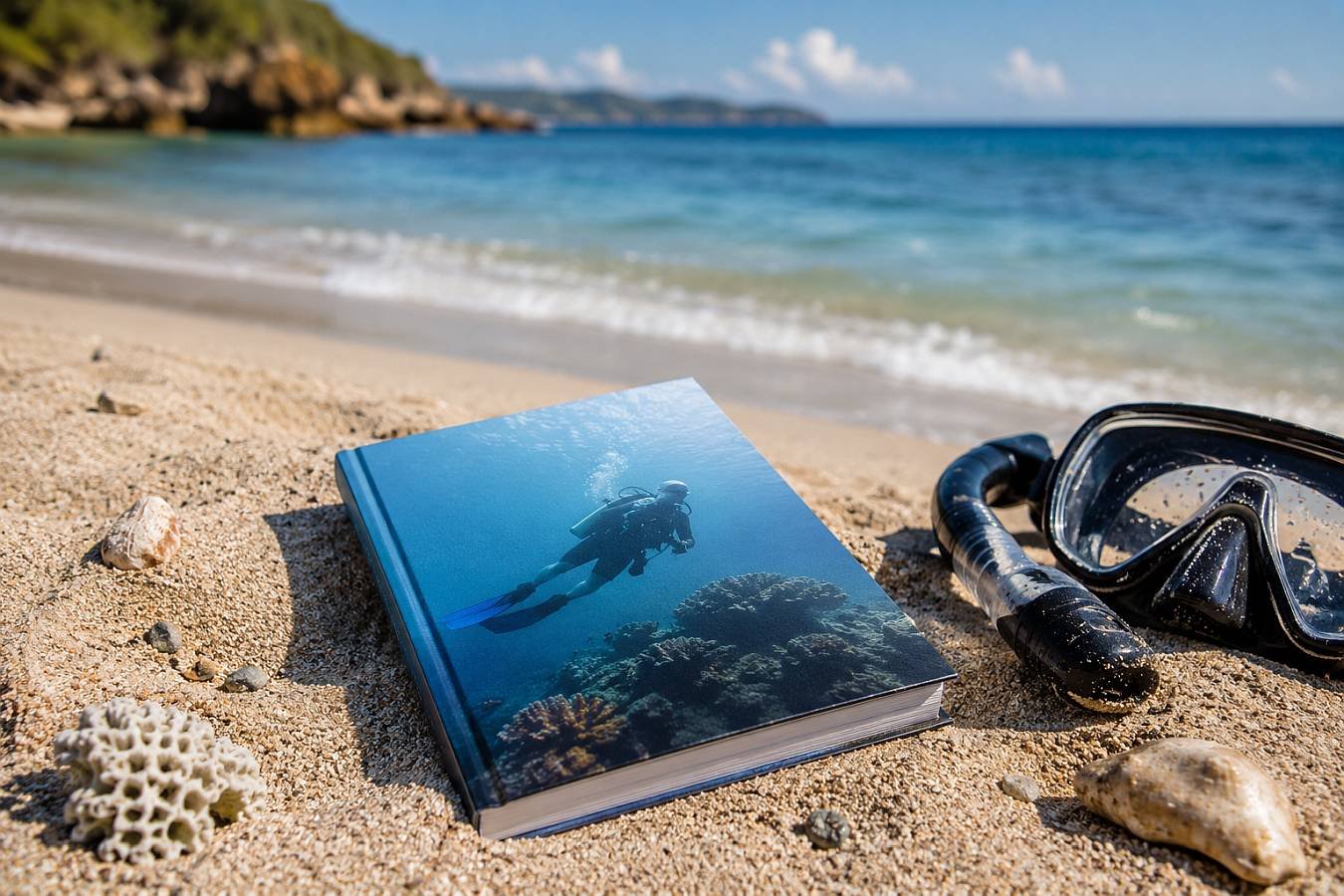
Scuba Equipment - The Mask and Snorkel
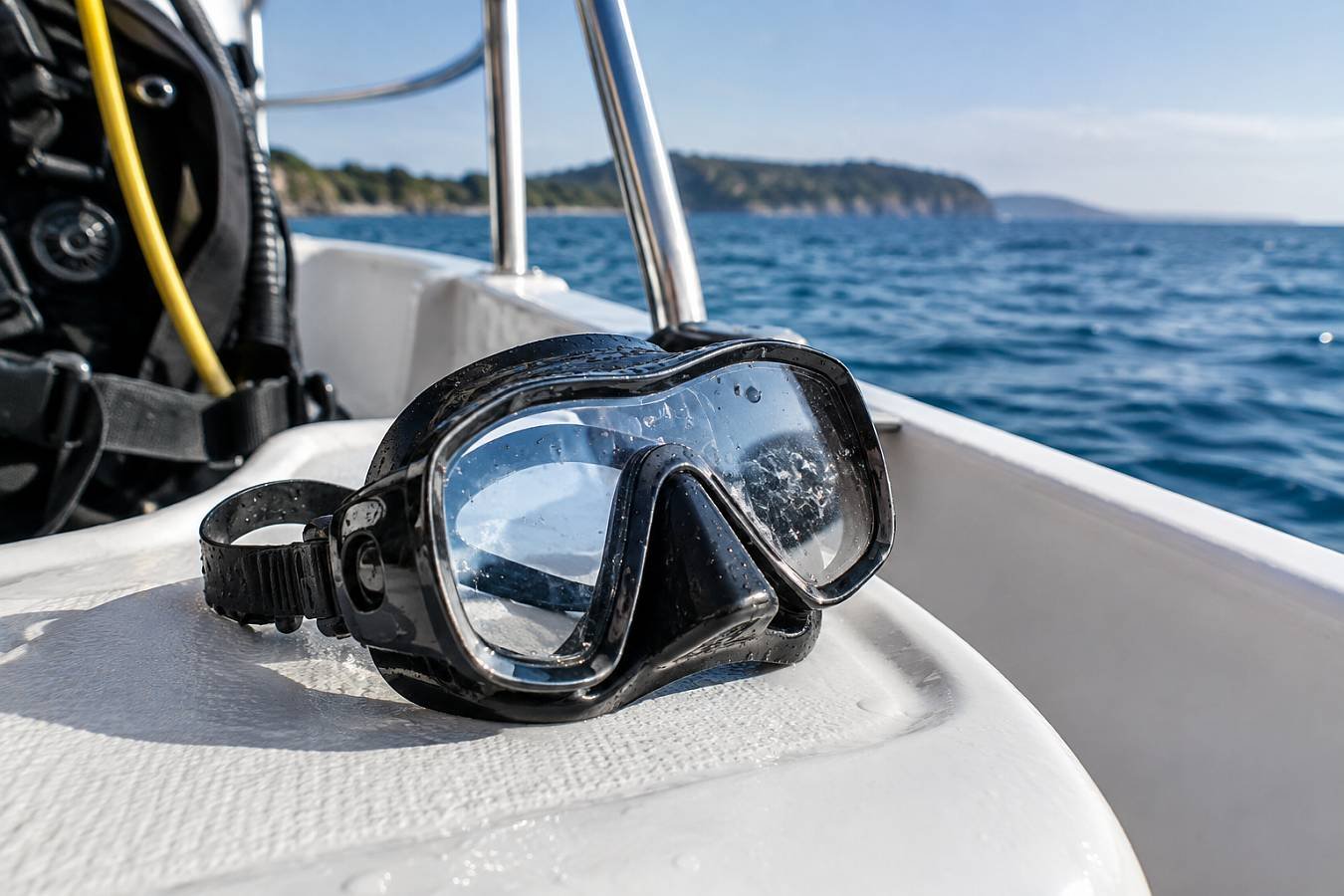
Choosing the right mask
The mask is one of the pieces of equipment I pay most attention to. If it does not fit properly, we will notice it throughout the dive. A good mask does not need to be expensive. It simply needs to fit our face well, keep the water out and give us a clear view underwater. This is why I always try a mask before buying it. What fits me well might leak on someone else, so choosing the right shape is much more important than choosing the most expensive one.
Before looking at how a mask works, it is useful to know its three main parts: the tempered glass lens, the nose pocket, and the soft seals that keep the water out.
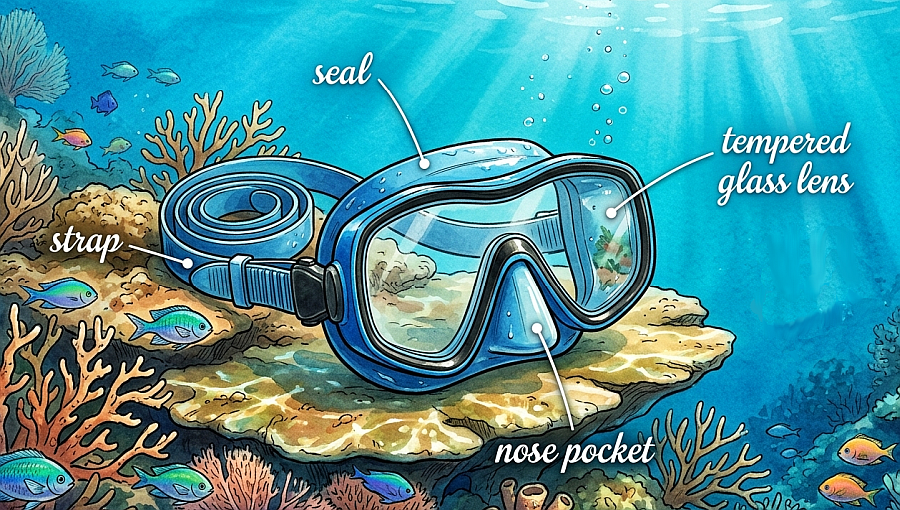
The nose pocket allows us to pinch our nose and equalise our ears as we descend. We may need to do this many times during a dive. A mask without a proper nose pocket, such as swimming goggles, is not suitable for scuba diving.
The nose pocket also lets us breathe out through our nose when we need to clear water from the mask. It is a simple feature, but one we quickly learn to appreciate.
The seal around the edge of the mask, also called the skirt, sits against our face and keeps the water out. Everyone's face is different, so a mask that fits one person perfectly might leak constantly for someone else. There is no single mask that suits everybody. From my experience, trying several masks before buying one can make a huge difference.
Testing the seal is easy and we can do it right there in the shop. I place the mask against my face without putting the strap on, breathe in gently through my nose and then let go. If the mask stays in place by itself, held there by the light suction created inside it, the seal is probably doing its job. If it immediately slips or falls away, I know that particular shape is not working for my face. There is no point trying to make it work. I simply try another shape or size.
The lens is the part of the mask that gives us a clear view of the underwater world. Proper diving masks use tempered glass for the lens rather than ordinary glass. Tempered glass is stronger and safer than ordinary glass. It can withstand the pressure and knocks we may encounter while diving. If it does break, it shatters into small pieces rather than large sharp shards, reducing the risk of serious injury.
For a first mask, I would always recommend going to a proper diving shop rather than buying one online without ever trying it on. Experienced staff can quickly help us find masks that are likely to suit the shape of our face and suggest a few worth trying. They can also explain the differences between skirt materials, lens shapes and field of view, making the choice much easier.
Getting that first mask right makes a huge difference to how comfortable we feel underwater. In my experience, good advice in a dive shop is worth much more than saving a few euros on a mask that does not fit.
Keeping the mask clear
Then there is the problem we all know sooner or later. A foggy mask can turn a perfectly good dive into a frustrating one. Condensation builds up on the inside of the lens and, before we know it, our nice clear view has become a blurry mess.
There are several ways of dealing with it. The usual solution during a dive is to let a little water into the mask. We gently rock the mask from side to side to spread the water over the inside of the lens. Then we press the top of the mask against our forehead and breathe out gently through our nose. The water carries the condensation away as it leaves the mask.
There are plenty of commercial defogging products available, and some divers use a tiny amount of washing-up liquid before a dive. I prefer baby shampoo. I find it gentler on the mask materials and it works well for me. A small bottle of it is one of those simple things I like to keep in my dive bag.
Getting comfortable with a flooded mask
Clearing a flooded mask is actually one of the more challenging skills when we first learn to scuba dive. The idea of deliberately allowing water into our mask feels completely wrong at first. After all, the whole purpose of the mask is to keep water out.
It takes a little practice in the pool before we become comfortable with it. The key is to relax before starting the procedure. Staying calm makes everything easier and is often the shortcut to success. Once the technique clicks, it becomes almost automatic. Eventually, a bit of water in the mask is no more than a minor inconvenience rather than something that can ruin the dive.
That is something I have always found interesting about learning to dive. Some of the things that feel most unnatural at the beginning eventually become things we do without even thinking about them. A flooded mask is a good example. At first, it can be unsettling. Later, we simply clear it and carry on with the dive.
The Snorkel
The snorkel is probably one of the simplest pieces of equipment we carry, but its purpose can be a little confusing when we first start scuba diving. After all, once we are underwater, we breathe from our regulator, so the snorkel has no real role during the dive itself.
I think of the snorkel as a useful piece of surface equipment. We can use it when swimming out to the dive site, waiting on the surface before descending, or making our way back to the boat or shore. Keeping our face in the water means we can breathe normally while swimming, rather than lifting our head every few seconds. This makes a surface swim much more comfortable and can save quite a bit of energy.
There is not much to a traditional snorkel. It is basically a plastic tube with a comfortable silicone mouthpiece. Some models have a purge valve at the bottom, which makes clearing water from the tube easier. Others have a splash guard or a dry top to reduce the amount of water entering from waves and spray. The snorkel normally attaches to the mask strap with a simple clip or loop. Personally, I prefer to keep things simple and use a basic snorkel without a purge valve or dry top. When we are already carrying a lot of equipment, I see little reason to add more complexity to something we may only use for a few minutes.
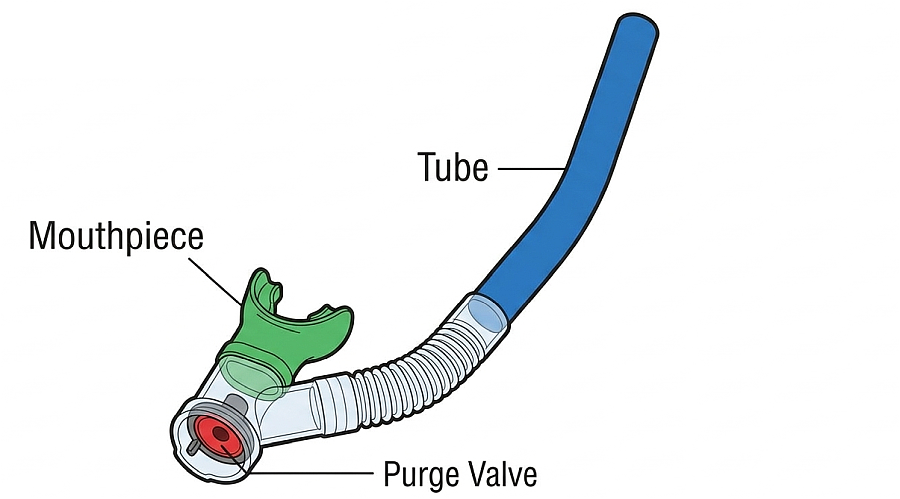
Another option that I find quite practical is the foldable snorkel. These models use flexible material so we can roll or fold them up and put them in a BCD pocket or a wetsuit pocket. Since we normally have no use for the snorkel once we descend, being able to put it away is a real advantage. It keeps our equipment tidy, gives us a cleaner profile in the water and reduces the chance of the snorkel catching on something. When we reach the surface and need it again, we simply take it out and unfold it.