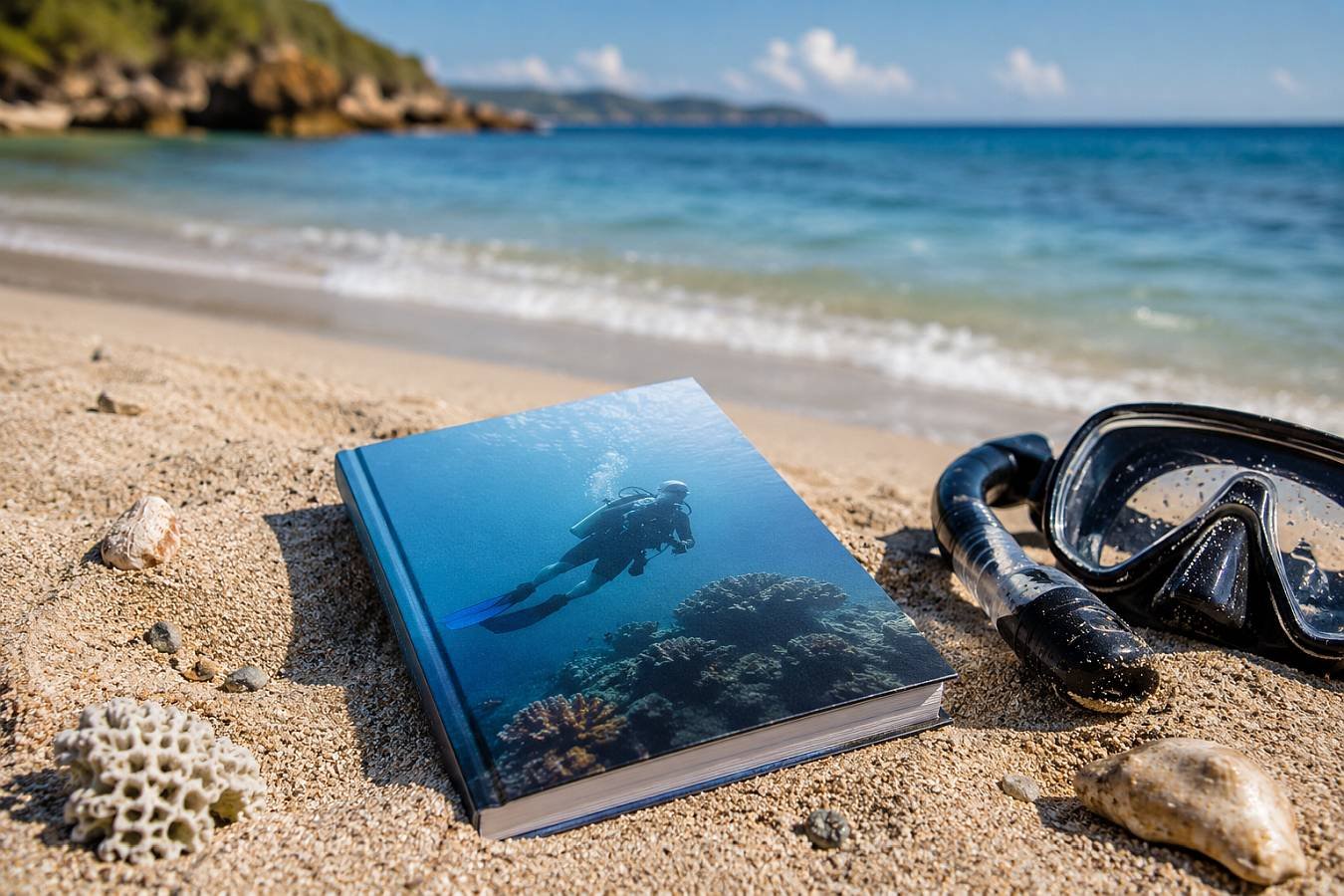
Scuba Equipment - Weights
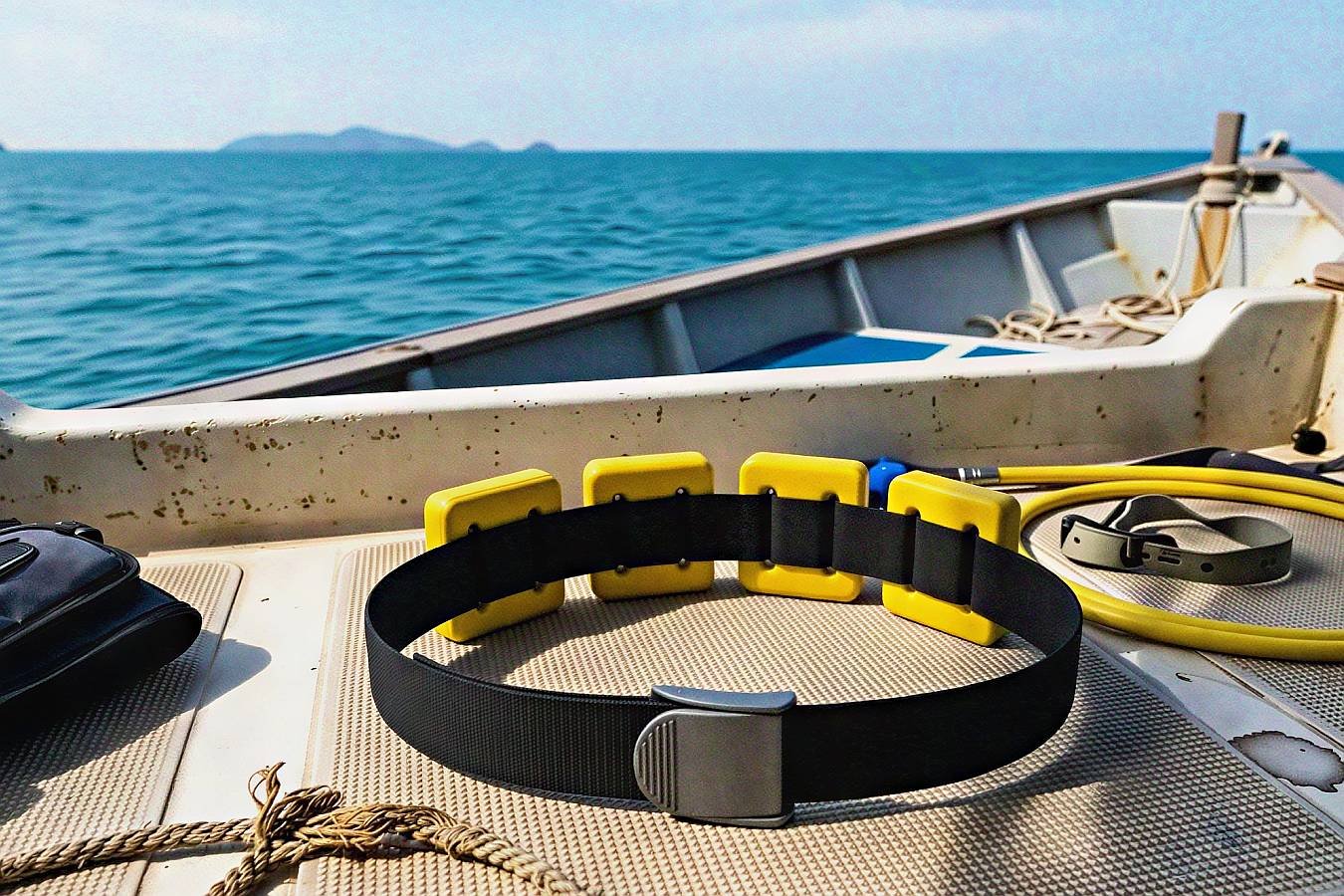
Most of us don’t value much weights until we start a dive and realise we can’t get down easily. Some of our equipment adds buoyancy, especially the diving suit. A diving suit make us float because the material and the air trapped inside increase our buoyancy. To compensate, we carry weights that help us descend and maintain neutral buoyancy underwater. Most diving weights are made of lead. Pockets filled with other materials, such as sand, as also common.
Ways to carry weights
There are several options. The most common are the traditional weight belt and the integrated weight system built into the BCD. Some divers prefer a weight vest worn underneath the BCD. Small trim weights can also be used to help us adjust our position in the water. The right choice depends on our equipment, the type of diving we do and what feels comfortable.
The weight belt
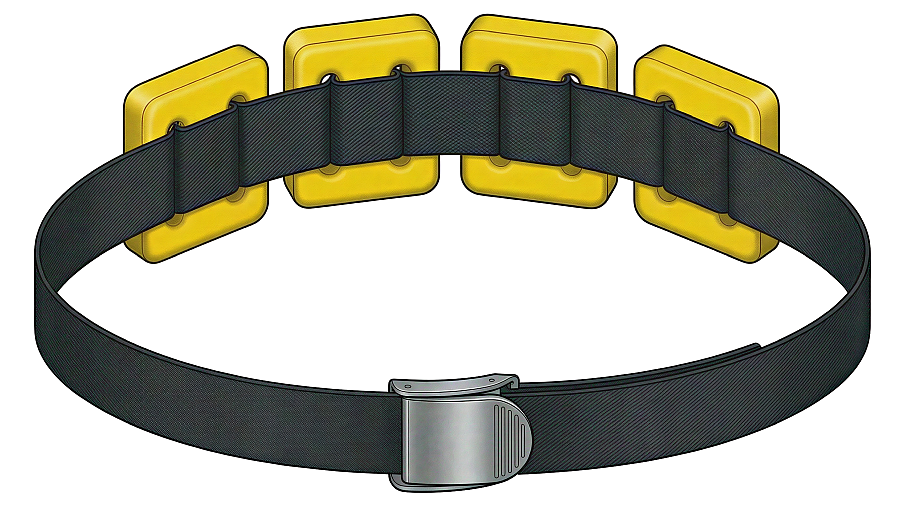
The weight belt is a traditional option that still works well. It is a sturdy belt threaded through individual lead weights and fastened around the waist. It is simple and easy to adjust, as we can add or remove weights as needed.
The main drawback is comfort. A heavily loaded belt puts pressure on our hips. And it may slip if it isn’t fitted properly. We must also make sure the buckle can be released easily in an emergency.
Integrated weights
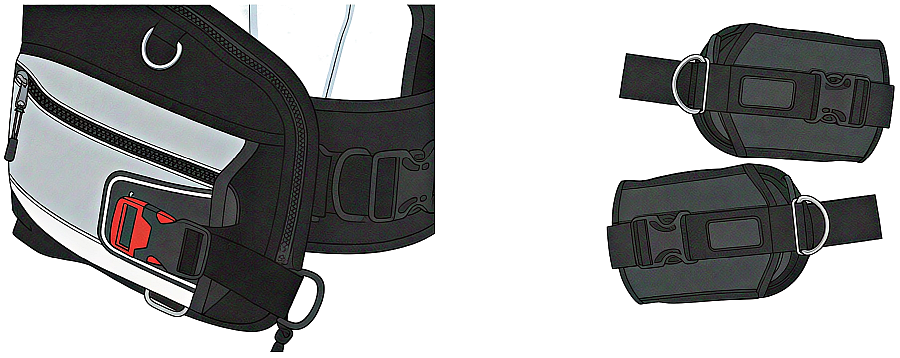
Integrated weights sit in dedicated pockets built into the BCD. We simply insert the weights into the pockets and secure them.
I find this system more comfortable. It distributes the weight around our torso rather than concentrating it all on the waist. The pockets have quick-release mechanisms that allow us to drop the weights when necessary. Before using them, we need to know how they work and practise using and releasing them.
Which one should we choose?
Both systems do the same job, and neither is better for every diver. A belt is simple, reliable and versatile, while integrated weights can be more comfortable and keep our equipment tidy.
When choosing, I consider how much weight I need, how well the system fits and how easily I can release it in an emergency. I sometimes use a combination of both to distribute the weight more comfortably. Whatever system we choose, we should practise handling it before getting into the water. It's also important hat our buddy is familiar with the sytem we are carrying, and how to release it in case of emergency.
How much weight do we need?
As a rough guide. A short wetsuit may require around 2 to 4 kg (4 to 9 lb) of lead. A full-length 5 mm wetsuit often requires 4 to 8 kg (9 to 18 lb). With a thicker 7 mm wetsuit or a semi-dry suit, this may increase to 6 to 10 kg (13 to 22 lb) or more. Drysuits can require additional weight, depending on the suit, the undergarments and the cylinder.
These figures are only estimates. Our body composition, the type of cylinder and the salinity of the water all affect how much weight we need. The best way to find out is to carry out a buoyancy check and adjust the weight accordingly.