The Andaman Chronicles - Day 4
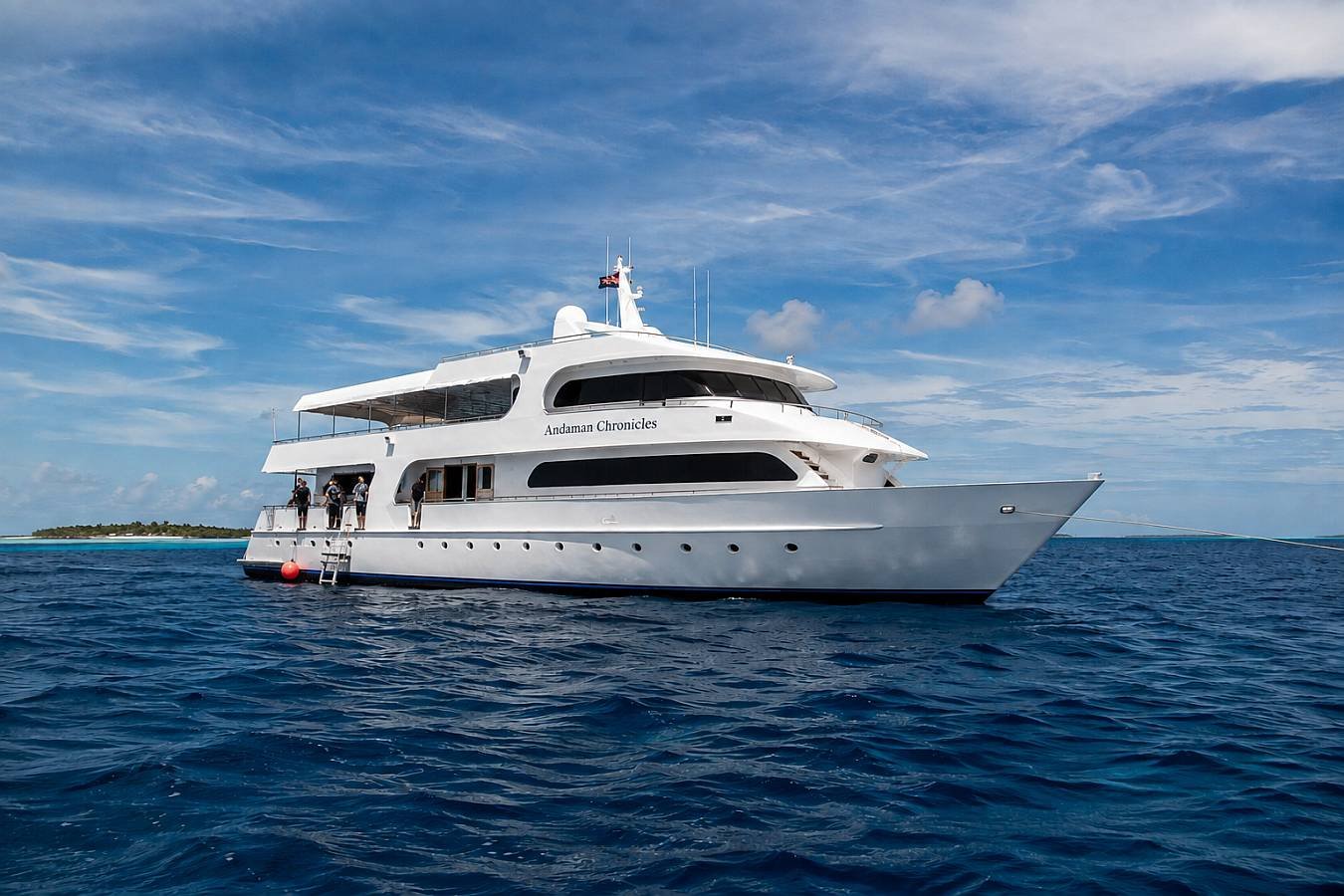
Tasks of the day, documenting corals gardens and identifying manta rays. The boat arrived in Koh Bon island early in the morning. After a delightful breakfast and briefing we prepared our equipment and jumped in the water. In the first dive we explored a pinnacle few thousands meters from the island. The walls were decorated with corals and anemones. We photographed and filmed as much as possible. Using the corals as refugee we found lobster, crabs and shrimps. The second dive was in a reef in the western side of the island. The sea floor was carved with dead coral. Niko took his big camera and was documenting the destruction. Many say it is because of the global warming and rise of the water temperature. Some say it was caused by the tsunami which desvasted Thailand few years ago. Some courageous ones blame the fishermen. But all agree that just few decades ago this place was a beautiful coral garden. We were already finishing our air and preparing a slow ascent when I saw an unusual pattern in the sea floor. I signaled to Niko to have a look and we headed to the centre of the coral graveyard. A geometric cubic pattern covered a significant area of the corals. It was a fishing net. I descended to the bottom and analysed the material while Niko was taking photos. The material was old and hard, calcified by sea water over the years. Under the net small fish made refuge. When I was trying to bend the material a small fish came from underneath and attacked my fingers biting as hard as possible. It was protecting its territory. A bigger fish approached and the small one diverted its attention to the other invasor. I took some notes about the location and dimension of the net. Definitely not all destruction can be justified by global warming. Niko took some more shots and we resumed our ascent.
The afternoon was less dramatic. We were going to visit the manta point in Koh Bon island. We had a long briefing from our guide Elsa who explained us the code of conduct for manta ray interactions. These shy animals must be treated cordially. The objective was to photograph the lower body of mantas in which is stamped a unique pattern used to identify them. We jumped in the water in open sea and swam to the ridge of the island. There was a plateau which is used by manta rays as a cleaning station. The site is popular and was full of divers. My first thought was that we were not be able to see any mantas. I was diving with Alex, a very precautious diver. I felt confident as I knew he was not going to take risks. We explored the deeper sides of the ridge documenting the marine file. Then we ascended slowly to a depth closer to the plateau. By that time less divers were around.
We did not wait too long when I saw a dark spot in the horizon in open water. I was hoping it was a manta, but then I noticed the long body and upper fin. Immediately I made the signal “shark” to Alex and pointed in its direction. Alex replied asking me to stay still. Slowly I grabed my camera e waited. It was a whitetip shark of a moderate size. The animal turned in the ridge direction, getting closer to us, then turned left and swam parallel to the ridge. Not close enough for me to get a shot, but Alex was filming with its GoPro.
Suddenly a shadow blocked the sun light. I looked up and saw a form flying over us, huge and dark. When I looked at Alex he was already filming. It turn around and came back flying over us. During its turn I could see the shape, dark on top, lighter underneath, two kind of antennas in front with a big eye on each, and flying graciously like an eagle. On the horizon no more shark to be seen. When it came over us I pointed the camera to the lower body and shot the pattern, dark spots in a white body. Then it went, descended over the plateau, likely on the cleaning station, ascended again and disappeared in the horizon. Two more minutes and two other mantas approached flying together in formation. This time they did not pass over us and I could not identify the pattern. One was huge, the biggest animal I ever saw if I exclude whales. I made a signal to Alex to ascend a bit more to get closer to the cleaning station. After a few consideration Alex replied with an Ok signal. We ascended slowly and then another manta ray approached. This one may have seen us or doubted about our intentions and got too curious. It came and pass so close over us that I could touch it if I raised my arm. But I didn’t. It came again and again until lost interest on us. Then it went to the cleaning station, passed touching the plateau and went away, for ever. We were low on air, Alex had good video documentation and it was time to surface. So, we finished what I can call the best dive experience of our expedition.