The Physics Behind Diving - Buoyancy
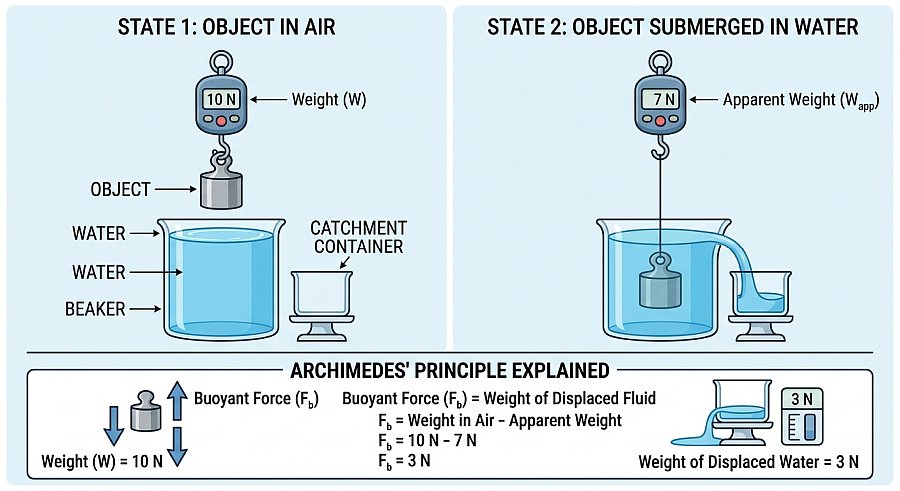
Buoyancy is based on a principle that has been understood for thousands of years. Long before anyone thought of putting a scuba tank on their back, Archimedes worked out why things float or sink in water. His principle still explains what happens to us every time we enter the water.
Archimedes' Principle states that an object immersed in a fluid experiences an upward force equal to the weight of the fluid it displaces.
In simple terms, when we get into the water, our bodies and equipment push the water occupied by them out of the way. The water pushes back against us with an upward force. This is buoyancy. Whether we float or sink depends on the relationship between our weight and the weight of the water we displace. If the displaced water weighs more than we do, we float. If it weighs less, we sink. When the two are equal, we stay at the same depth without rising or falling. This is what we call neutral buoyancy, and learning to achieve it is one of the most important skills in scuba diving.
Several things affect our buoyancy. Our body composition makes a difference, which is why some people naturally float more easily than others. Our wetsuit also has a big effect. The neoprene contains tiny bubbles that take up space and help us float. Our cylinder, weights and other equipment all change the overall balance as well. Even our breathing makes a difference. When we take a full breath, the extra air in our lungs makes us slightly more buoyant. When we breathe out, we become slightly less buoyant.
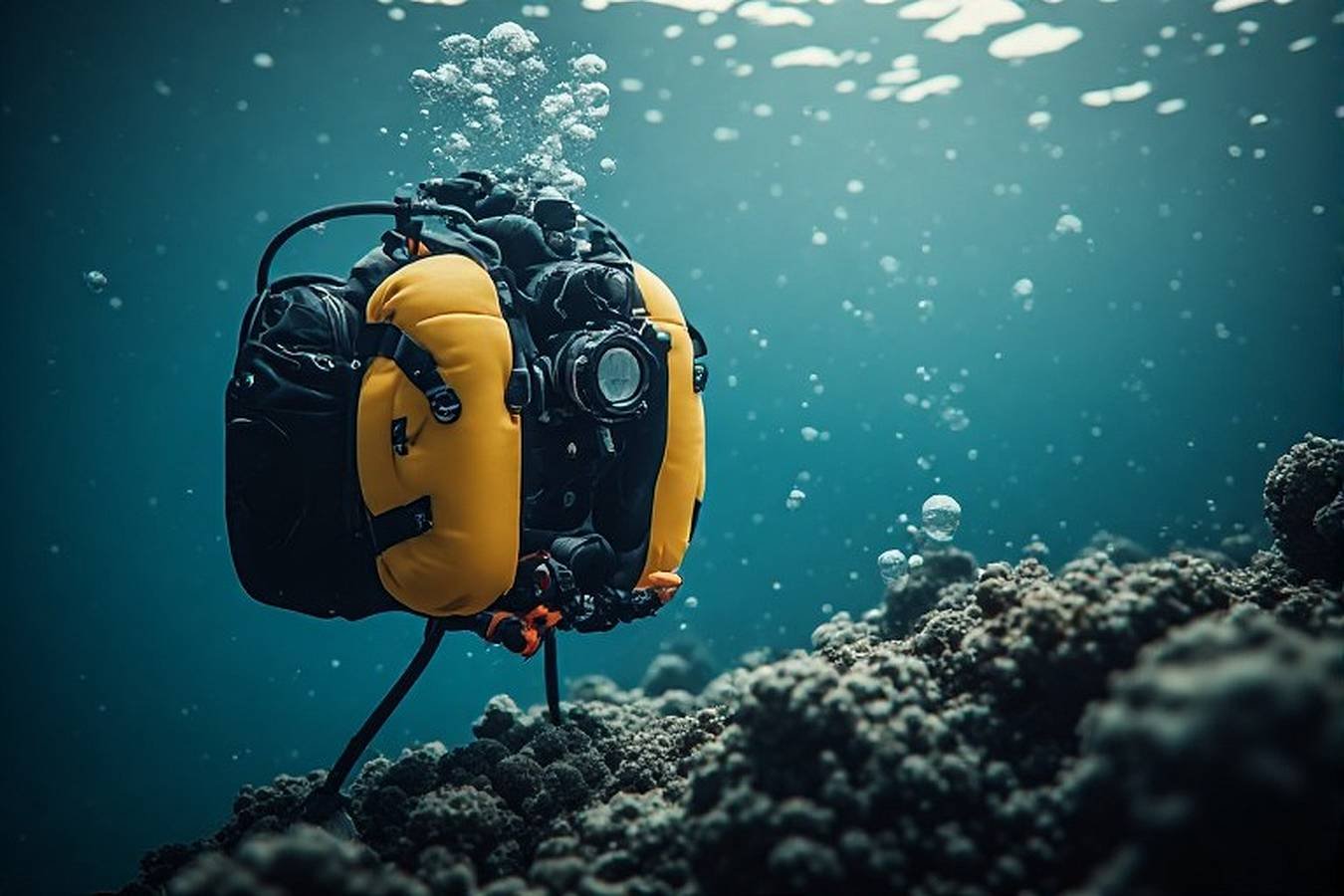
This is where the Buoyancy Compensator, or BC, becomes so useful. We use it to make small changes to our buoyancy while we are underwater. When we add air to the BC, it becomes larger and displaces more water. This gives us more upward lift. When we release some of the air, the BC becomes smaller and we lose some of that lift, allowing us to descend.
The BC is not really there to make us fly up and down in the water. We use it to fine tune our position and compensate for changes that happen during the dive. For example, as we descend, the air in our wetsuit becomes compressed and we lose some of our buoyancy. Adding a little air to the BC helps us compensate for this. As we ascend, the air in the BC expands and we may need to release some air to prevent ourselves from rising too quickly.
We find that good buoyancy is mostly about making small adjustments and then giving the equipment time to respond. There is no need to keep pressing the inflate or deflate buttons. A little air can make a noticeable difference. With practice, these adjustments become almost automatic.
When we get our buoyancy right, diving becomes much easier. Instead of constantly kicking to stay at a certain depth, we can relax and let the water support us. We use our breathing and our BC to make small corrections and allow ourselves to move smoothly through the water. That is when scuba diving really starts to feel less like swimming and more like floating exactly where we want to be.