The Physics Behind Diving - Decompression Illness
This article follows on from "The Hidden Effects of Nitrogen"
Decompression illness, or DCI, is a general term covering two related diving conditions, decompression sickness, or DCS, and arterial gas embolism. Both can involve gas bubbles affecting the body, but they arise through different mechanisms. The symptoms can vary considerably. We may experience unusual tiredness, joint or muscle pain, tingling, numbness, dizziness, weakness, difficulty breathing or changes in our ability to think or coordinate movements. In more serious cases, the nervous system can be affected.
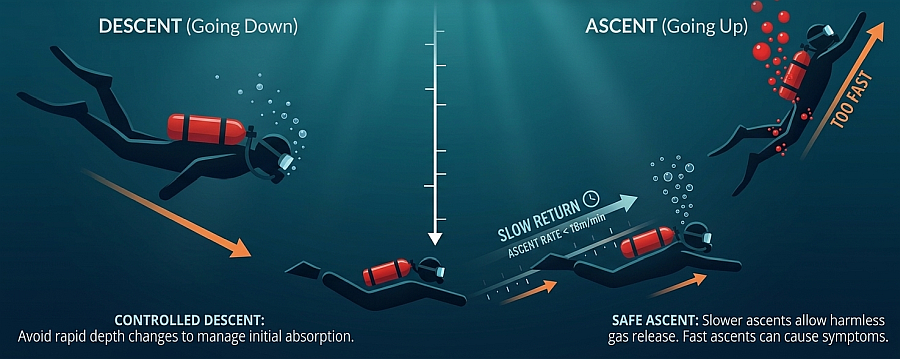
The best way to deal with decompression illness is to prevent it from happening. We do this by planning our dives properly and following the limits and procedures appropriate for our training. We should control our depth and bottom time, make a slow and controlled ascent and complete any required safety or decompression stops.
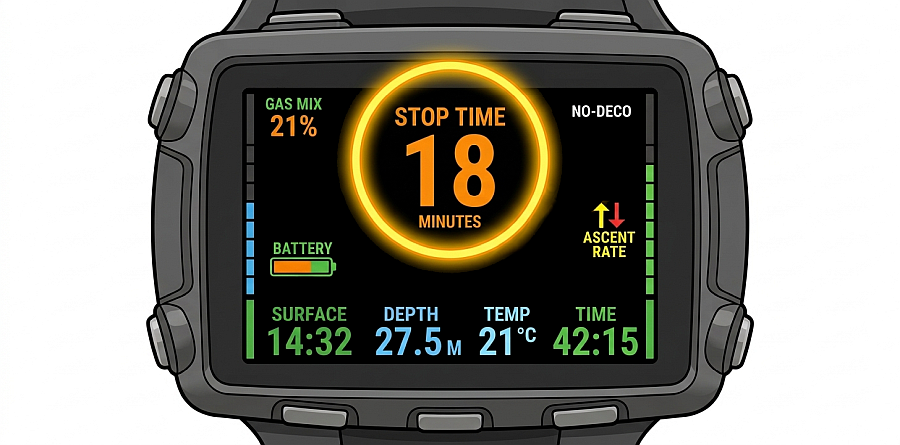
Our dive computer can help us monitor our exposure, but it should not replace good judgement or proper training. We also need to consider repetitive dives and remember that our body may still be eliminating nitrogen after we have left the water.
There are also some simple habits that help us reduce unnecessary stress on our body. We should be properly hydrated, rested and physically prepared before diving. We should avoid alcohol before diving and should not dive when we are unwell. After diving, we should allow our body sufficient time before flying or travelling to significant altitude. Following the guidance provided by our training agency and dive computer is particularly important when planning this interval.
If we develop symptoms that could indicate decompression illness, we should treat them seriously even if they appear mild. Our first priority is to stop diving and seek appropriate medical assistance. Breathing a high concentration of oxygen can be an important first aid measure while professional help is arranged. We should not try to treat suspected decompression illness by returning to the water or attempting another dive.
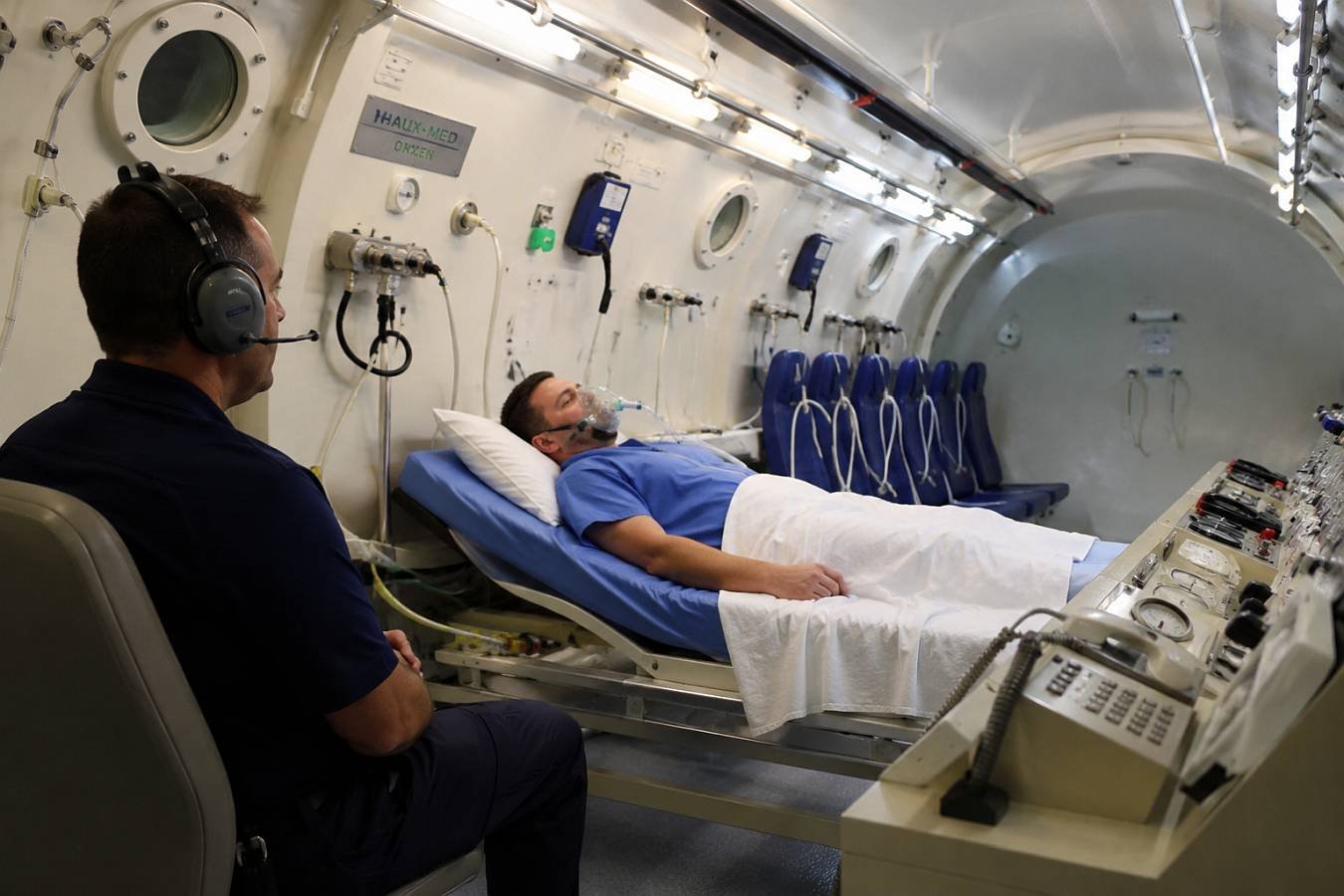
The definitive treatment for significant decompression illness may involve recompression in a hyperbaric chamber. There, the patient can be exposed to increased pressure while breathing oxygen under controlled medical supervision. The increased pressure can help reduce the size of gas bubbles while oxygen supports tissues that may not be receiving enough oxygen. Treatment is most effective when it is started promptly, so we should never delay seeking medical advice simply because the symptoms seem to be improving.
One of the greatest dangers is denial. We may notice an unusual pain, tingling, weakness or extreme tiredness and convince ourselves that it is nothing serious, especially when we do not want to end a dive or spoil a trip. We should resist that temptation.
If something does not feel right after a dive, it is safer to treat it as a possible sign of decompression illness and seek medical advice rather than ignore it and hope it goes away.
For us as divers, the important lesson is that decompression illness is not something to fear every time we enter the water. With proper training, sensible dive planning, controlled ascents and respect for our limits, we can greatly reduce the risk. At the same time, we should always know the warning signs and have a clear plan for getting help. Being prepared means that if something unexpected happens, we are much more likely to respond calmly and correctly.