The Physics Behind Diving - Effects of Pressure on the Human Body
Pressure affects the parts of our body that contain air. Our tissues are mostly liquid and therefore do not change volume significantly with pressure, but the air spaces in our ears, sinuses, lungs and mask respond directly to changes in ambient pressure. Understanding these effects helps us recognise what we are feeling underwater and react before a minor problem becomes a serious one.
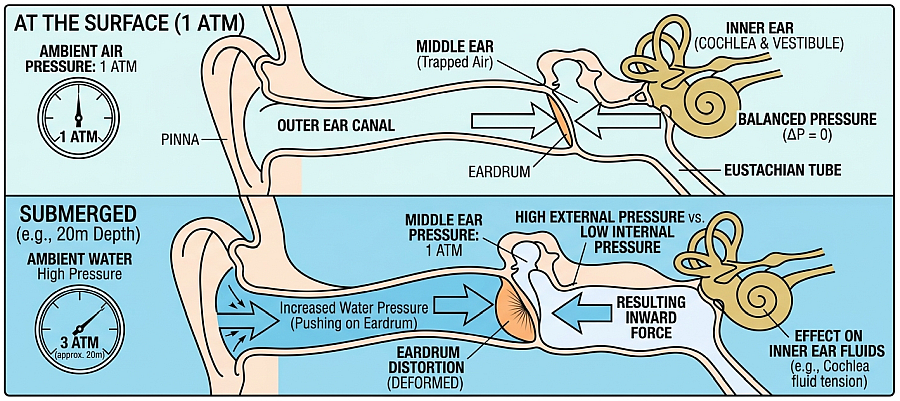
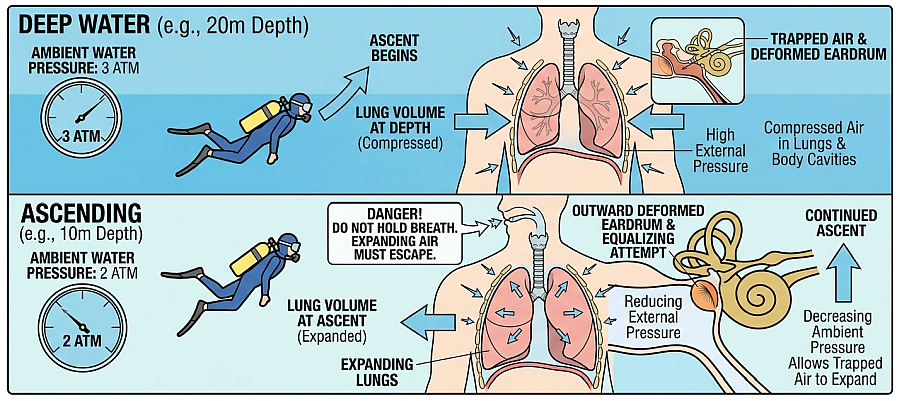
Our ears are usually the first place where we notice the change. During descent, the pressure outside the eardrum increases while the pressure in the middle ear remains lower. We need to equalise this pressure difference by allowing air to enter the middle ear. We should equalise early and often and never wait until pain develops. If an ear does not equalise, we should stop descending and move slightly shallower. Forcing an equalisation can damage the ear.
The sinuses can cause similar problems. They contain air spaces connected to the nasal passages by narrow openings. When these passages are blocked by congestion, inflammation or a cold, air may not move freely enough to compensate for the changing pressure. This can cause pain around the forehead, cheeks or eyes. For this reason, diving while congested is best avoided. Medication should not be used simply to make an otherwise unsuitable dive possible.
Signalling to our buddy that we want to end the dive is completely normal procedure, not something to feel embarrassed about, and every diver is trained to do exactly that whenever it is needed.
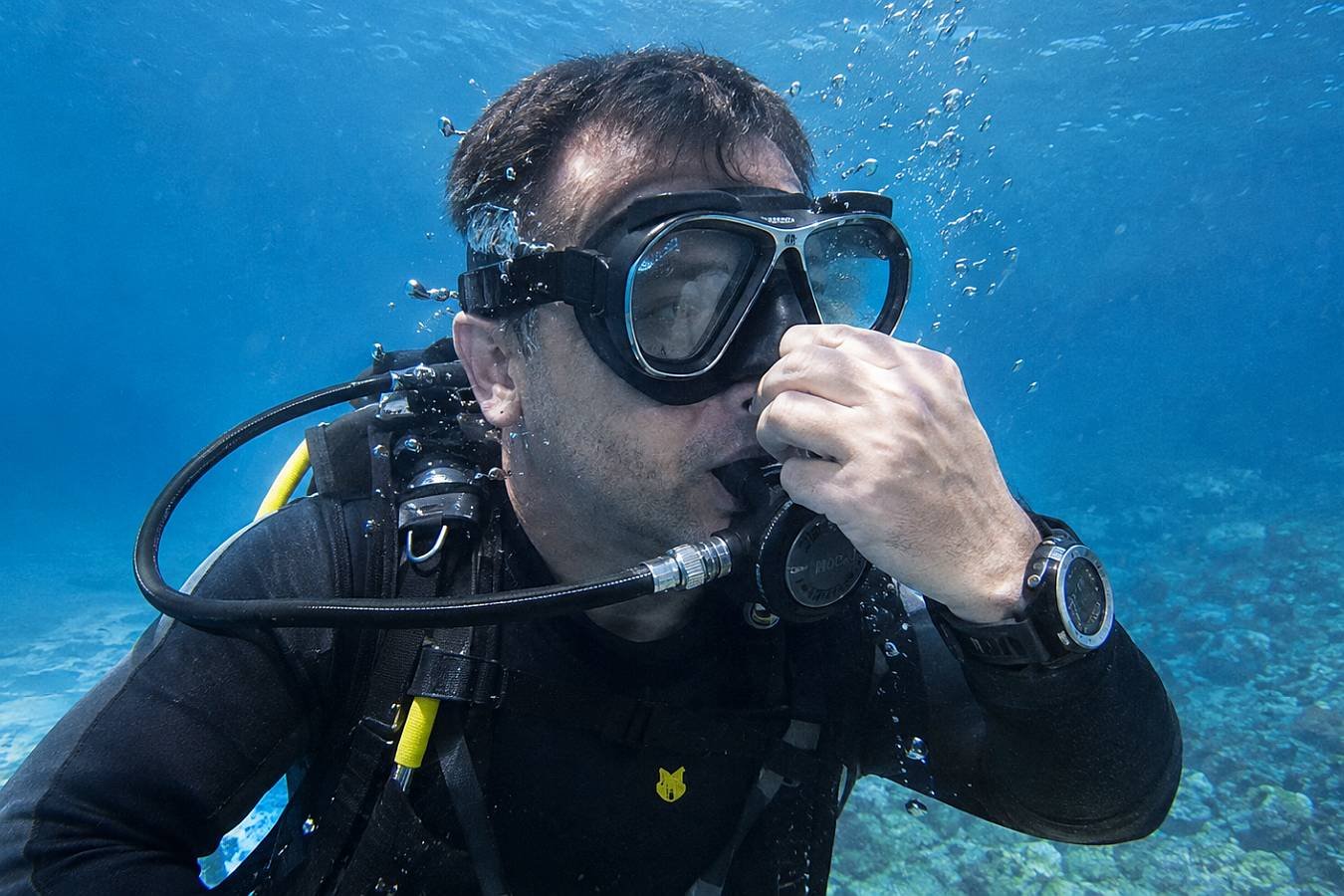
Our mask also contains an air space, so we need to compensate for the pressure change during descent. As the air inside the mask is compressed, the mask can begin to press against our face. A small amount of air breathed gently through our nose into the mask restores the pressure and prevents discomfort. This is a simple habit, but it is important to remember it during every descent.
Our lungs require particular attention because they are connected directly to the breathing gas. The regulator delivers gas at the surrounding pressure, allowing us to breathe normally as we descend. During ascent, however, the gas in our lungs expands as the ambient pressure falls. We must therefore continue breathing normally and never hold our breath. Holding our breath during an ascent can cause serious lung injury.
Pressure also changes the physical properties of the breathing gas itself. As ambient pressure increases, the gas becomes denser. At greater depths, each breath contains more gas molecules, so our breathing gas becomes more difficult to move through our airways and regulator. This can make breathing feel more difficult and can increase our gas consumption. Gas density becomes an increasingly important consideration as depth increases, particularly when planning deeper dives.
The effects of pressure are also important when we use equipment. A gas cylinder contains compressed gas, and its pressure gives us an indication of how much gas remains. At depth, however, each breath consumes more gas from the cylinder than the same breath would at the surface because the regulator delivers gas at the higher ambient pressure. This is why our gas supply decreases much faster during a deep dive.
Pressure itself is not something we need to fight against underwater. Our equipment and our techniques allow us to adapt to it. We equalise our ears and mask, breathe normally, control our descent and ascent, and pay attention to how our body feels. When we understand what pressure is doing to the different air spaces in our body, many of these effects become predictable and much easier to manage.