The Physics Behind Diving - Nitrogen Narcosis
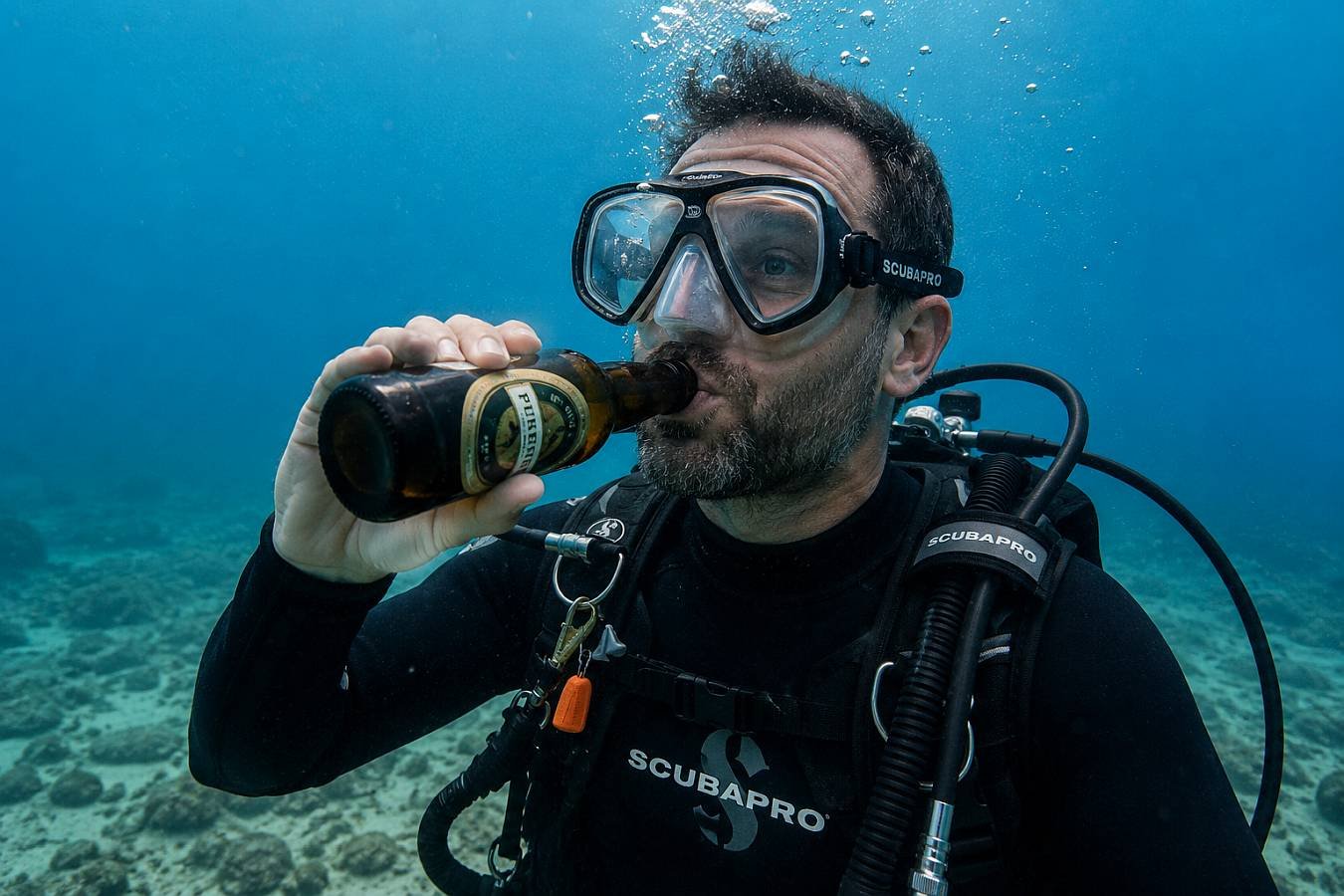
Nitrogen narcosis is another effect of breathing compressed gas at depth. As we descend, the pressure of the nitrogen we breathe increases. At sufficient depth, this can affect the way our nervous system functions and temporarily alter our perception, judgement and coordination. The effect is sometimes compared with being under the influence of alcohol, which is why it is often called the rapture of the deep. The effects are generally more noticeable at depths greater than 30 metres (100 feet), although individual susceptibility can vary considerably and some divers may experience narcosis at shallower depths.
The exact mechanism is complex, but the increased pressure of nitrogen appears to interfere with the normal function of nerve cell membranes and communication within the nervous system. We may experience a feeling of euphoria or unusual confidence, slower reactions, difficulty concentrating or a distorted sense of time and distance. Some divers become unusually relaxed, while others may feel anxious or confused. The most concerning effect is the loss of good judgement because we may not recognise that our thinking has become impaired.
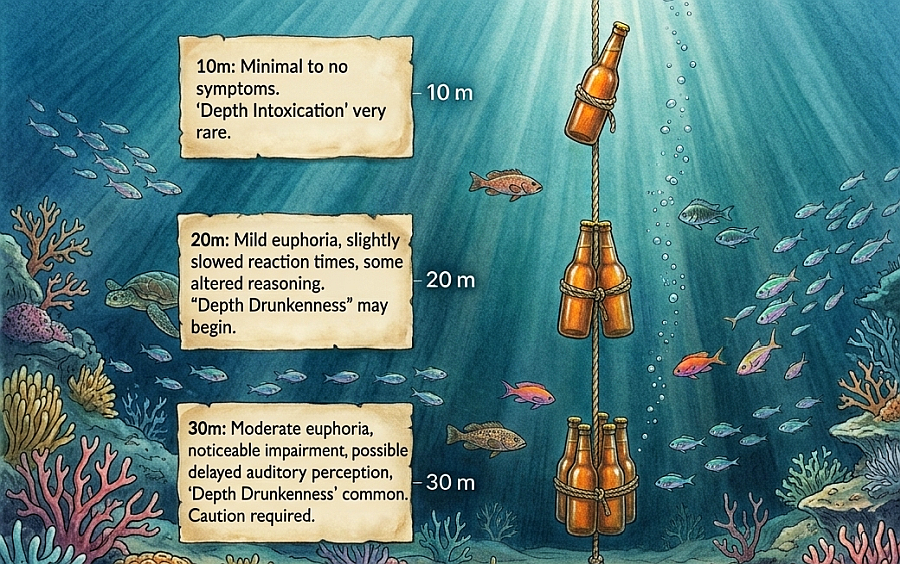
One of the difficulties with nitrogen narcosis is that we may not realise that it is happening. A diver who is affected can feel perfectly capable of continuing the dive and may not recognise the changes in their own behaviour. This is where our buddy becomes particularly important. We should pay attention to unusual behaviour in our team and be prepared to respond if someone appears confused, distracted or unable to carry out a familiar task.
The most effective way to cope with nitrogen narcosis is to ascend to a shallower depth. Because the effect is caused by increased gas pressure, it normally diminishes rapidly as the surrounding pressure decreases. We should stop, regain control of the situation and ascend in a controlled manner. If a task becomes difficult or something does not feel right, there is no reason to prove that we can continue. Moving to a shallower depth is usually the simplest and safest response.
Good preparation also helps us reduce the risk. We should stay within the depth limits appropriate for our training and experience and avoid unnecessarily deep dives. We should also remember that narcosis can affect our judgement even when we feel confident. In deeper diving, particularly technical diving, gas selection and proper planning become increasingly important because reducing nitrogen exposure can help manage narcosis. The important lesson for us is to recognise that depth can change not only the way our body handles gases but also the way our mind works underwater.