The Physics Behind Diving - Working Out How Much Gas We Need
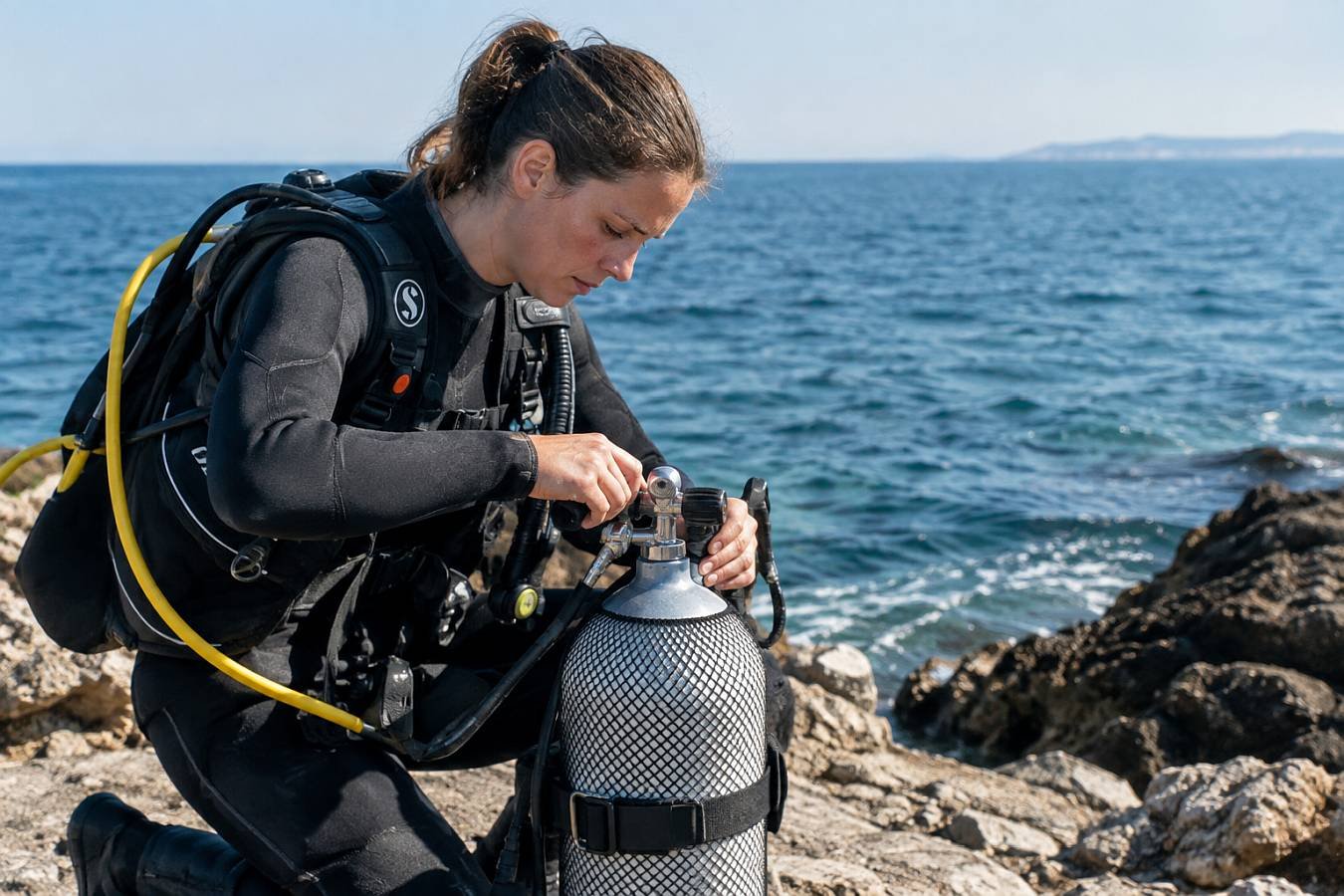
I take having enough gas very seriously when planning a dive. I never start a dive simply because my cylinder happens to be full. Before getting in the water, I want to have a good idea of how deep we are going, how long we intend to stay there and, most importantly, how much gas we will need to get back to the surface safely. Our gas has to cover the whole dive, including the ascent, any safety stop and a reserve for those situations when things do not go according to plan.
For this example, I am going to stick with metric units. It keeps the maths straightforward and matches what most of us use in recreational diving. We will work with litres per minute for our breathing rate, bar for pressure, metres for depth and minutes for time.
A good place to start is with our breathing rate at the surface. Let us say 25 litres per minute for this example. At the surface, that means we are breathing our way through roughly 25 litres of gas every minute. Once we descend, things change. Our regulator delivers gas at the surrounding pressure, so the deeper we go, the more gas we consume for every breath.
The basic calculation is:
Gas required = breathing rate × ambient pressure × dive time
Let us say we are planning a dive to 18 metres for 40 minutes. At that depth, the ambient pressure is around 2.8 bar. Using our breathing rate of 25 litres per minute, we get:
25 × 2.8 × 40 = 2800 litres
So, on paper, we would consume around 2800 litres of gas during the dive. Of course, this is only an estimate. We are assuming that we stay at 18 metres for the entire 40 minutes and that our breathing rate remains constant, neither of which is particularly realistic. During a real dive we are constantly changing depth, and our breathing rate can change considerably depending on what we are doing. Swimming against a current, carrying equipment, cold water or simply feeling stressed can all make us breathe more heavily.
This is where a reserve becomes important. If we use the rule of thirds, we keep one third of our available gas in reserve rather than planning to consume it during the normal part of the dive. In other words, the 2800 litres we have calculated represents two thirds of the gas we should have available. We therefore need roughly 4200 litres in total.
Total gas required = 1.5 × breathing rate × ambient pressure × dive time
Now we can start thinking about what size cylinder we need. We simply divide the total amount of gas we require by the pressure to which the cylinder is filled.
Cylinder size = total gas required ÷ cylinder pressure
In our example, we need around 4200 litres. With a cylinder filled to 210 bar, that would mean:
4200 ÷ 210 = 20 litres
So we would theoretically need a cylinder with a capacity of around 20 litres. That is certainly not the sort of cylinder most of us would choose for an ordinary recreational dive. It highlights an important point about this calculation. Rather than simply choosing a huge cylinder, we would normally adjust the dive itself. We might reduce the bottom time, change the depth, use a different gas strategy or otherwise adapt the plan to match the equipment and reserve we actually have available.
These calculations give us a useful starting point, but they are not a substitute for proper gas planning. I also want to consider our actual dive profile, cylinder size and starting pressure, my own breathing rate, what my buddy is carrying and how much gas we might need to deal with a problem and reach the surface safely. The simple calculation above also assumes that the entire dive takes place at one depth, whereas our actual gas requirement will vary as we descend and ascend.
There are plenty of online calculators that can do the maths for us, and I find them useful for checking figures or experimenting with different scenarios before a dive. But I think it is important not to let a calculator become a black box. We should understand what the numbers represent and, more importantly, why they matter.
For me, good gas planning is about much more than making sure I have a full cylinder when I get in the water. It is about knowing that I have enough gas to complete the dive, deal with the unexpected and still have something left when I need it. That peace of mind is worth far more than simply seeing the needle sitting at 200 bar.