When the Pressure Became Too Much
I'll be honest with you. When I think about the things that can go wrong while diving, three come to mind straight away. Decompression illness, getting lost at sea and barotrauma.
I had been freediving and holding my breath since I was young. I would dive a few metres down, stay underwater for as long as I could and then come back up. I never had problems with my ears. Everything felt natural. I felt like a fish, and pressure was something I simply did not think about.
When I started my first scuba diving course, that feeling did not change. We trained in the swimming pool and in shallow lakes, and I never felt any real pressure in my ears. My instructor did everything properly and repeatedly told us to equalise from the beginning of the descent. I knew the technique and I knew I should be doing it. But knowing something and practising it are two different things. Because I did not feel any discomfort, I never really developed the habit of equalising early and often. I simply did not see the need.
Then came my first dives in the ocean. We were spending five days diving in a natural reserve, one of the best diving areas in the region. I was excited. I still remember that first dive clearly. There was a wall dropping down to about 12 metres, followed by a flat plateau full of marine life.
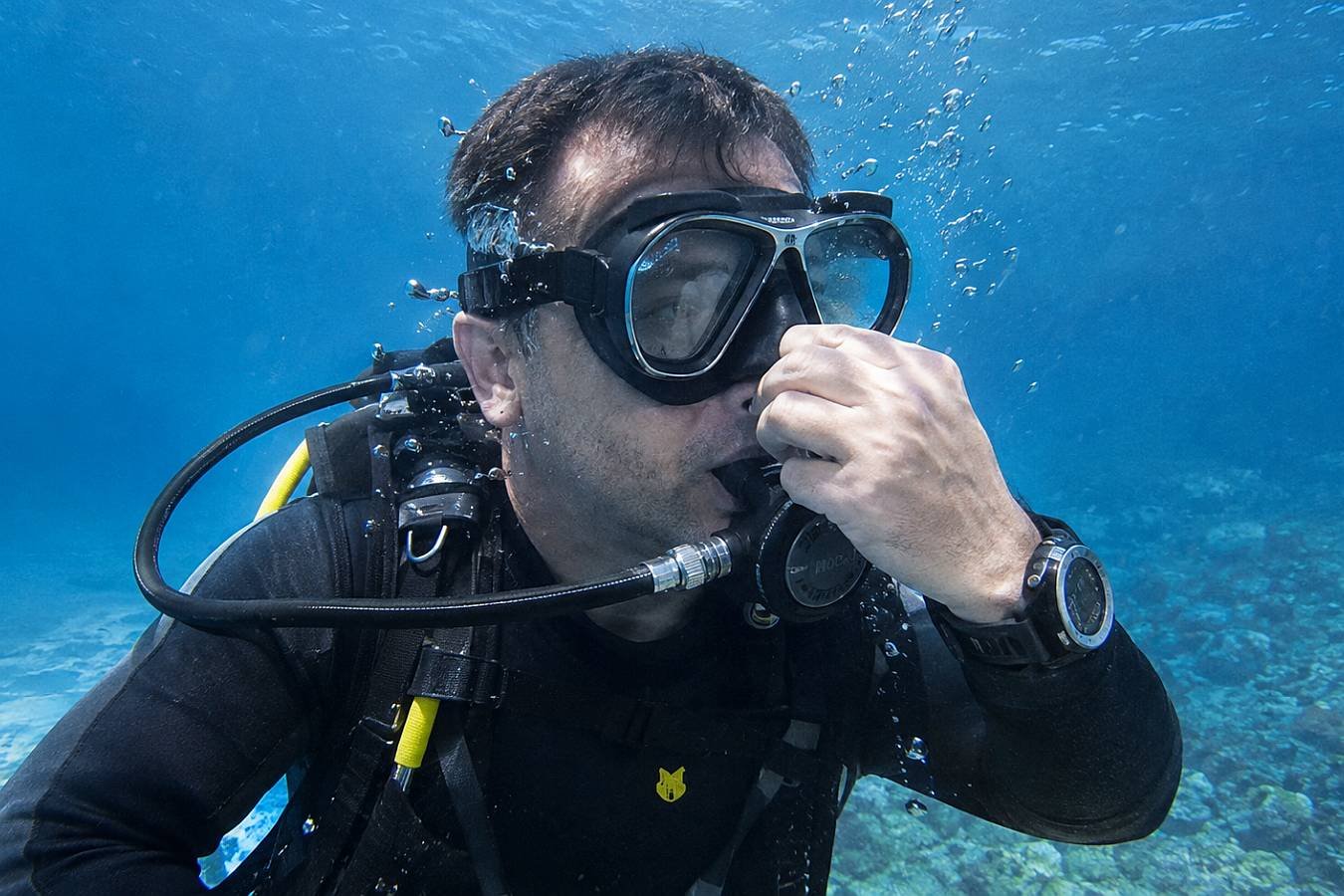
We started our descent along a shot line. At around six metres, I noticed some discomfort in my ears. I tried to equalise, but nothing happened. My instructor was right beside me, watching carefully. I should have stopped. Instead, I watched the other divers continuing down and followed them. I did not signal that I was having trouble. That was my first mistake.
By 10 metres, the discomfort had become pain. I tried to equalise again. Still nothing. My instructor looked at me and asked if I was OK. I said yes. That was my second mistake.
The plateau was only a couple of metres below us. I thought I could just get there and everything would be fine. It wasn't. The pain suddenly became unbearable. This time I finally signalled to my instructor that something was wrong with my ears. He immediately stopped the descent and took me a few metres back up the shot line.
We stayed there while I tried again and again to equalise. These were techniques I should have practised properly during my training, but I had never really needed them before. Nothing worked. Then, after several minutes, I felt a strong and painful pop. My ears finally equalised. They were still uncomfortable, but the pressure had gone. I signalled that I was OK and we continued the dive.
At the time, I thought the problem was over. For the rest of the trip, I had the strange feeling that something was stuck in my ear. I initially assumed it was just water, like the feeling you sometimes get after swimming. But it did not disappear. Then I started noticing a low buzzing sound when I was trying to sleep. That was when I decided to see a doctor. The diagnosis was barotrauma, followed by an ear infection.
The infection was not what worried me most. What really stayed with me were the doctor's words.
– "If this happens again, you must stop diving."
I had only just started.