Your Guide to Snorkelling
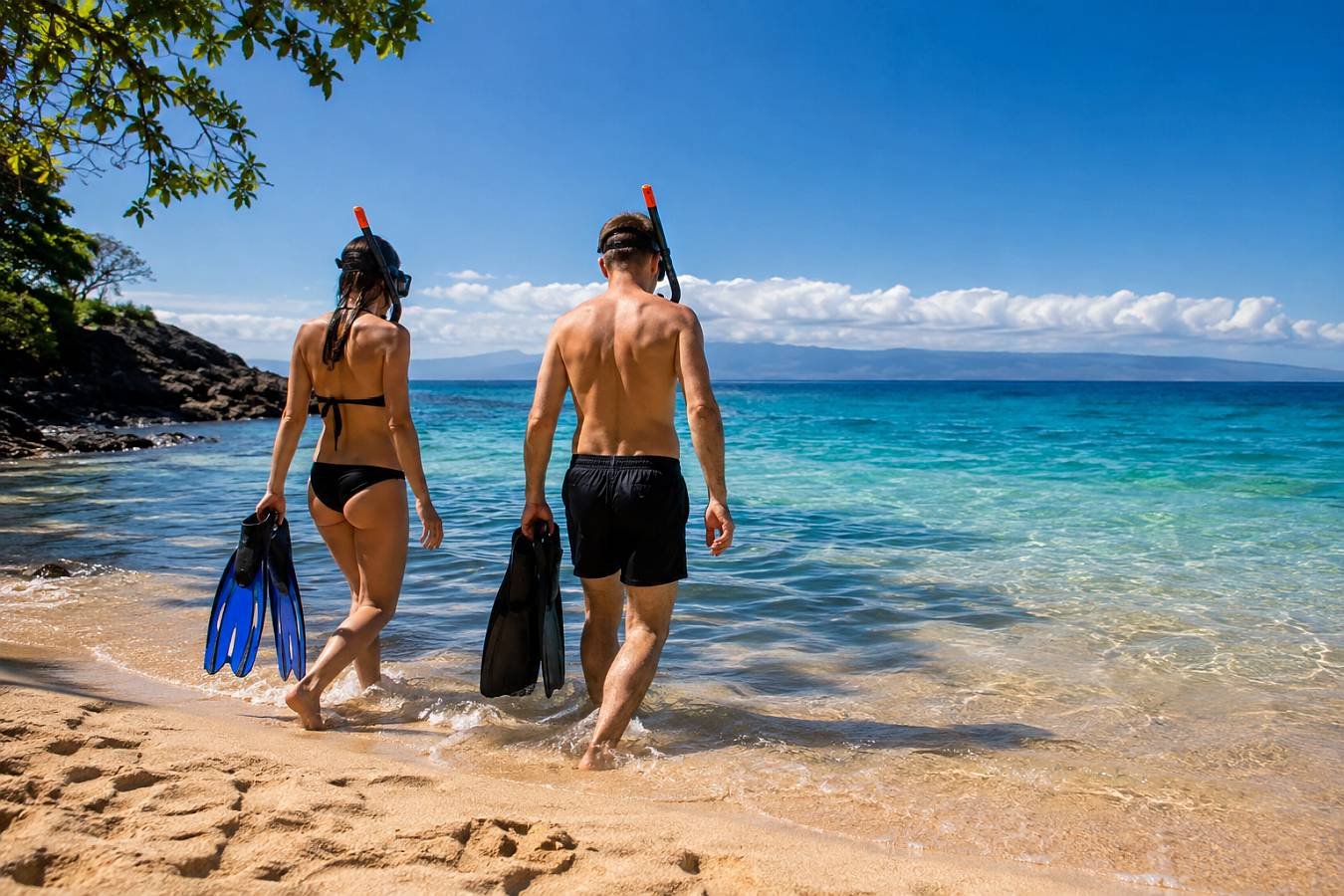
I started my own journey into the underwater world with snorkelling. It seemed like a simple and natural way to get used to being in the water, looking beneath the surface and discovering a world that I had only ever seen from above. Snorkelling also gave me the opportunity to become comfortable with a mask and fins, learn how to move efficiently through the water and practise staying submerged for short periods. Before I ever tried scuba diving, I had already developed a basic feeling for how my body moved underwater and how to use my fins without wasting energy. Looking back, I think snorkelling was an excellent introduction to diving because it allowed me to discover the fascination of being underwater without having to deal with all the equipment and skills that come with scuba diving.
Equipment
When I first started snorkelling, I was surprised by how little equipment I actually needed. Unlike scuba diving, there is no complicated system of tanks, regulators and buoyancy equipment. The basic setup is simple, comfortable and easy to carry, which is one of the things that makes snorkelling such an accessible way to discover the underwater world.
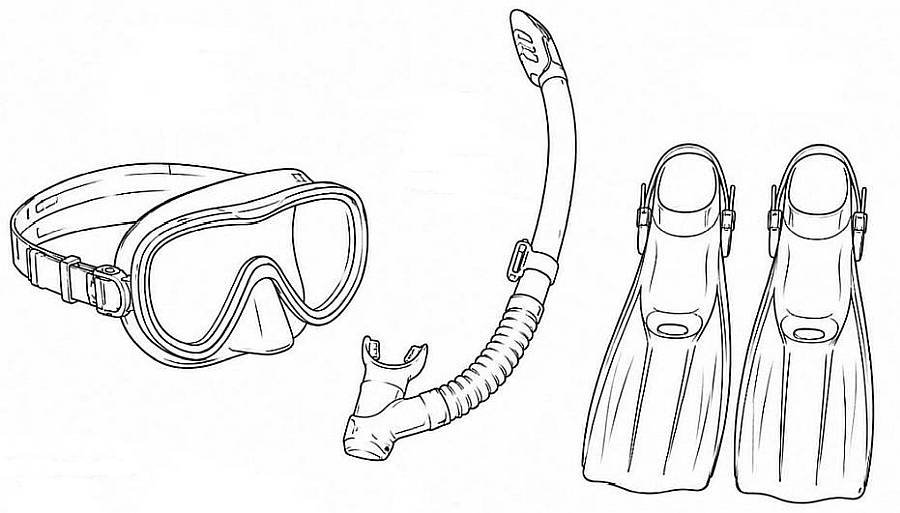
The mask is probably the most important piece of equipment. It allows you to see clearly underwater while keeping your eyes and nose protected from the water. A good mask should fit your face comfortably and create a watertight seal without needing to be tightened excessively. I would always recommend spending some time finding a mask that fits properly, because even a very expensive mask becomes frustrating if it constantly leaks or feels uncomfortable. Visiting a diving shop in person is always a good idea. The staff are used to helping people find the right fit and can quickly identify whether a mask is likely to leak.
The snorkel allows you to breathe while your face is in the water. It is a simple tube with a mouthpiece that extends above the surface. When choosing one, comfort is more important than complexity. The mouthpiece should feel natural and not cause jaw fatigue. Some snorkels also have a splash guard at the top or a valve at the bottom that makes clearing water from the tube easier. These features are convenient, but they are not essential for learning to snorkel. My own snorkel is a plain tube with the recommended dimensions.
Fins make swimming much easier and are one of the pieces of equipment I would recommend using from the beginning. Instead of relying mainly on your arms, you use your legs to produce a smooth kicking movement. This lets you move more efficiently and reduces fatigue. There are different types of fins, including shorter fins designed specifically for snorkelling and longer fins that provide more power. For relaxed recreational snorkelling, shorter fins are often easier to handle. There are two types of fins worth knowing about. Shoe fins come with the foot pocket built in and are perfectly fine for warm water. Strap fins have an open heel and need separate booties, which adds a layer of kit but also means you can choose the bootie that suits the conditions. In cold water I wouldn't go without strap fins and a good pair of neoprene booties.
Snorkelling socks or booties are optional, but I find them useful when wearing strap fins. They can prevent rubbing and make the fins more comfortable, particularly during longer sessions. They also provide some protection for your feet when walking over rough surfaces or entering the water from a rocky shore.
A swimsuit or rash guard provides your basic protection from the environment. In warm tropical water, ordinary swimwear may be all you need. A rash guard can provide additional protection from the sun and can also reduce irritation from the water or equipment. In cooler water, a wetsuit becomes useful because it provides thermal protection and allows you to stay comfortable for longer. Even a relatively thin wetsuit can make a noticeable difference when you are spending a lot of time in the water.
There are also several optional accessories that can make snorkelling safer or more convenient. A surface marker buoy is a particularly useful addition if you are snorkelling away from the shore or in an area where boats may be present. It makes you more visible at the surface and can help other water users see where you are. A small waterproof bag can be useful for carrying keys or other essentials, while an underwater camera can help you capture some of the moments that make snorkelling so memorable.
Finally, I would consider sun protection part of my snorkelling equipment even though it does not go in the water. A hat, reef safe sunscreen and clothing that covers exposed skin can be very important because you can burn surprisingly quickly while floating on the surface. Once you are comfortable with the basic equipment, you can add accessories according to where and how you like to snorkel. The important thing is not to let the equipment become more complicated than the activity itself.
Finning techniques
When I started snorkelling, I quickly realised that using fins was not simply a matter of kicking my legs as hard as possible. The way you move your legs makes a big difference to how efficiently you swim and how much energy you use. A relaxed and controlled kick allows you to stay in the water for much longer without becoming tired.
The flutter kick is probably the most natural technique to start with. You move your legs alternately up and down, keeping the movement relatively small and coming from the hips rather than just bending your knees. I found that keeping my legs relaxed made a big difference. When I tried to kick too hard, I used more energy without really moving any faster.
The frog kick is another useful technique, particularly when you want to move slowly and maintain better control. Both legs move together, bending at the knees and then pushing the water backwards with the fins before bringing the legs back together. It is especially useful when you want to avoid disturbing the water too much or when swimming close to the bottom.
The dolphin kick uses both legs together in a flowing movement. The movement starts around the hips and travels through the legs to the fins. It takes a little more practice than the flutter kick, but once you get the rhythm right it can feel surprisingly smooth. I found it more useful as I became more comfortable in the water rather than something I needed when I was just starting out.
Another technique worth learning is back kicking, which can help you move backwards or make small adjustments to your position. It is not something you will necessarily use on every snorkelling trip, but learning how your fins behave when moving in different directions gives you much better control in the water.
I spent a considerable amount of time perfecting my finning. At first, I thought it was something that would simply come naturally with experience, but I eventually realised that small changes in technique could make a surprisingly big difference. Learning to keep my movements controlled and efficient made my time underwater much more enjoyable. It also carried over into my scuba diving and made the whole diving experience better.
The important thing is not to concentrate on speed. Good finning is about control, efficiency and relaxation. Once the movement becomes natural, you can spend more time looking around and enjoying what is happening beneath you instead of thinking about how you are moving through the water.
Breathing
Breathing through a snorkel feels a little strange when you first try it. The first thing I had to get used to was keeping my face in the water while breathing through my mouth. With the mask covering my nose, I could not simply breathe through my nose as I normally would. Once I relaxed and established a steady rhythm, it quickly became quite natural.
When the snorkel is above the surface, breathing is very straightforward. I take slow, comfortable breaths through the mouthpiece and try not to breathe too quickly. There is no need to take exaggerated breaths. A calm breathing rhythm helps conserve energy and makes snorkelling much more enjoyable. I also found that keeping the snorkel positioned comfortably in my mouth helped prevent unnecessary movement and made breathing easier.
If I want to put my face deeper underwater, I first take a normal breath while the snorkel is above the surface. I then hold my breath while swimming underwater. The important thing to remember is that a snorkel does not supply air when you are completely submerged. Once the opening of the snorkel goes underwater, you cannot breathe through it. For this reason, underwater snorkelling should always involve controlled breath holding rather than trying to inhale through a submerged snorkel.
Coming back to the surface requires a little attention because the snorkel may contain water. As I approach the surface in a controlled way, I look up keeping the tip of the snorkel pointing downwards. And I give a continusouly breath out through the mouthpiece to expell the water. Once the snorkel is above the water, I can clear any remaining water from the tube before taking a normal breath through it.
With practice, breathing and clearing the snorkel become almost automatic. I spent some time getting comfortable with this before concentrating on swimming further or exploring underwater. That preparation made me much more relaxed in the water and allowed me to enjoy the surroundings instead of constantly thinking about whether I could breathe properly.
An important point to remember is not to over ventilate before submerging. Taking a series of very deep or rapid breaths in an attempt to fill the lungs with extra oxygen can actually be dangerous because it lowers the level of carbon dioxide in the blood. This can delay the normal urge to breathe and increase the risk of losing consciousness during a breath hold. I learned that there is no benefit in trying to force as much air as possible into the lungs before going underwater. A calm and natural breath is a much safer approach.
Instead, I use some simple breathing techniques that I learned from yoga to slow down my breathing and relax before entering the water. I focus on breathing gently and steadily, allowing the breath to become slower without forcing it. This helps me relax both physically and mentally and gives me a much calmer start to the dive. I find that the goal is not to hold my breath for as long as possible, but to enter the water feeling comfortable and relaxed.
Now, Let’s Explore
The best snorkelling spots are not necessarily the places with the most famous names. What can be found underwater matters more than any advertised paradisiac destination. And it all depends on yourself. I usually look for places where there is plenty of marine life, clear water and interesting underwater landscapes.
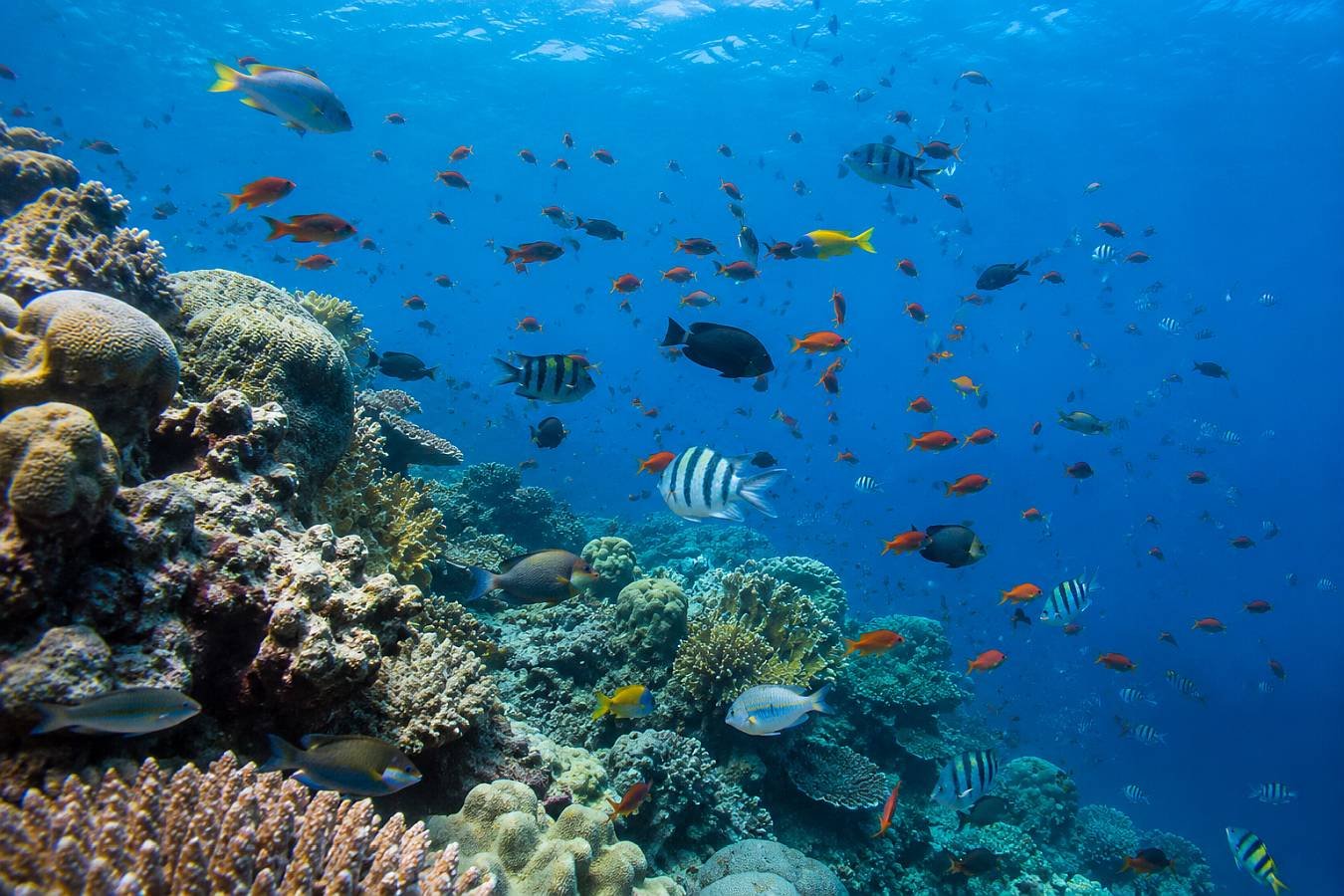
Coral reefs are probably the first places that come to mind. They offer an incredible variety of life in a relatively small area. Fish hide among the coral, larger fish pass by, and there is always something moving or changing when you look closely. Some can be found very close to the shore.
I have found that rocks provide plenty of places for fish and other creatures to hide. The rock formations can be extremely beautiful, especially when they form archs or small caverns. But, bare in mind, never enter a cavern when snorkelling. The risk of entrapment is serious.
Seagrass meadows might not look as spectacular at first, but they are rich in life. Small fish, crabs, seahorses and other creatures can use the grass as shelter.
Sheltered bays and lagoons are definitely my choice. They have calmer conditions, making it easier to relax and spend more time exploring. A sheltered area can also provide a mixture of sandy patches, rocks and vegetation, giving you different environments to explore in one place.
Drop offs and walls can be exciting for experienced snorkellers. The bottom suddenly becomes deeper, and you can see larger fish moving along the edge. These areas give me the feeling of looking into a much bigger underwater world. But they do require more care, when there are currents or boat traffic nearby.
Whatever type of spot I choose, I pay attention to the conditions before getting into the water. Calm conditions, good visibility, limited boat traffic and easy access are as important as the marine life. The perfect snorkelling spot is somewhere that lets me relax, move slowly and take the time to observe what is happening beneath the surface.